Volume: 3 Issue: 3
Patient Preferences for Continuation of Post-Hospitalisation Rehabilitation Through Inpatient Rehabilitation Centres, Home Healthcare and Telehealth: A Cross-Sectional Survey in Bangalore
Year: 2026, Page: 115-125, Doi: https://doi.org/10.71325/ajjms.v3i3.26.47
Received: Sept. 5, 2026 Accepted: Sept. 10, 2026 Published: Sept. 30, 2026
Abstract
Background and objective: The growing need for post-hospitalisation rehabilitation in India highlights the importance of understanding patients’ preferences for continuing care. This study described patient-reported preferences and views regarding continuation of rehabilitation through inpatient rehabilitation centres (IRCs), home healthcare, and telehealth among patients receiving IRC care in Bangalore. Methods: A descriptive cross-sectional survey was conducted in five IRCs in Bangalore from July to December 2022. Adults aged ≥18 years admitted for post-hospitalisation rehabilitation participated. Data were collected using a 26-item investigator-developed questionnaire covering IRC care (11 items), home healthcare (8 items), and telehealth (7 items). Descriptive statistics, selected chi-square tests, and Cramer’s V were used; no regression analysis was performed. Results: Among 432 participants aged 20–88 years, 54.4% were male. IRC was the most preferred continuation mode (48.1%), followed by home healthcare (23.1%), hospital-based care (15.0%), and telehealth (13.7%). Favourable views were reported for continued IRC care, including perceived faster recovery (73.9%) and reduced OPD visits (76.2%). Home healthcare received substantial support for continuity (82.6%) and emergency access (79.8%). Telehealth continuation was preferred by 80.6%, although concerns regarding digital resources and privacy were common. Preferences were significantly associated with participant age, clinical risk category, time since injury, previous hospital admissions, and payment mode (all p < 0.001). Conclusion: Among patients already receiving IRC care, continuation of IRC was most preferred, with substantial support for home healthcare and telehealth. Preferences for continuation pathways were strongly associated with clinical and demographic circumstances. These findings reflect patient-reported preferences and may inform patient-centred, IRC-supported continuation services in similar settings.
Keywords: Post-hospitalisation rehabilitation; Inpatient rehabilitation centres; Home healthcare; telehealth; Patient preferences
INTRODUCTION
The burden of noncommunicable diseases (NCDs) in India is increasing, accompanied by growing numbers of patients who require rehabilitation following hospitalisation for conditions such as stroke, cardiovascular disease, cancer, diabetes-related complications, and other chronic illnesses. Rehabilitation is an essential component of comprehensive health care because it helps individuals regain or maintain functioning, independence, and participation in family, community, and work-related activities[1, 2]. However, access to timely and continuous rehabilitation remains inadequate, particularly in low- and middle-income countries, where a substantial proportion of people who need rehabilitation do not receive appropriate services[3]. Rehabilitation services are also frequently concentrated in hospital and institutional settings, creating a need for better continuity across different levels and settings of care[4]. In this context, inpatient rehabilitation centres (IRCs) represent an emerging model for providing structured post-hospitalisation rehabilitation and supporting continuity of care beyond acute hospital treatment.
IRCs may provide opportunities to continue rehabilitation through multiple service-delivery modes, including continued on-site rehabilitation within the IRC, IRC-supported home healthcare, and IRC-supported telehealth. Such flexible approaches may facilitate continuity while allowing rehabilitation to be adapted to patients’ needs and circumstances. Patient preferences are particularly important when designing patient-centred continuation pathways, as meaningful participation of rehabilitation users is recognised as an important component of strengthening rehabilitation services[5]. However, evidence remains limited regarding how patients already receiving care in IRCs perceive and prefer different options for continuing rehabilitation after their current phase of inpatient care. Understanding these preferences may assist in developing rehabilitation pathways that are responsive to patients’ expectations and support continuity of care.
Therefore, this study aims to describe the preferences and views of patients receiving care in IRCs regarding continuation of rehabilitation through continued IRC care, IRC-supported home healthcare, IRC-supported telehealth, and continued hospital-based care.
METHODS
Study design and setting
A descriptive cross-sectional survey was conducted between July and December 2022 to describe patients’ preferences and views regarding continuation of post-hospitalisation rehabilitation. The study was conducted in five large inpatient rehabilitation centres (IRCs) in Bangalore, India, each with a capacity of more than 50 beds. These centres provided structured rehabilitation services to patients following discharge from acute hospitals for medical and surgical conditions.
Study population
The study population comprised adults aged 18 years or older who had been discharged from a hospital following a medical or surgical condition and were currently admitted to an IRC for continued rehabilitation at the time of recruitment. Thus, all participants were already receiving rehabilitation in an IRC at the time of recruitment. Patients were excluded if they had severe cognitive impairment that precluded informed consent or meaningful participation in the survey, or if they were unwilling to provide informed consent.
Sampling and sample size
A multi-stage sampling approach was used. First, five IRCs were purposively selected based on their size and provision of inpatient rehabilitation services. Within each selected IRC, eligible patients were recruited using convenience sampling until the required sample size was reached. The minimum sample size was estimated assuming a 50% response distribution, a 5% margin of error, and a 95% confidence level, resulting in a minimum requirement of 384 participants. A total of 550 patients were approached for eligibility assessment. Of these, 50 were excluded before enrollment (25 did not meet the inclusion criteria, 20 refused to participate, and 5 for other reasons). Thus, 500 patients were enrolled in the study. Subsequently, 68 participants were excluded from the final analysis because of incomplete data (n = 50) or withdrawal before completing the survey (n = 18). The final analytical sample therefore comprised 432 participants. The resulting sample was therefore a facility-based, non-probability sample, and its representativeness of all patients receiving rehabilitation in Bangalore or elsewhere in India is limited.
Data collection instrument
Data were collected using an investigator-developed, 26-item structured questionnaire with four sections: Socio-Demographic and Clinical Characteristics Data (Items 1–19), Inpatient Rehabilitation Centre and Patient Care (Questions 1–11), Home Healthcare (Questions 12–19), and Telehealth (Questions 20–26). Section 1 assessed socio-demographic and clinical characteristics and comprised 19 items, including participant identification number, age, income, gender, employment, marital status, type of residence, domicile, age at the time of illness, education, previous accommodation, time since injury, previous hospital admissions, primary cause of the condition, patient risk factors, preferred treatment, length of stay, mode of payment, and hobbies. Section 2 comprised questions addressing the inpatient rehabilitation centre and patient care. Section 3 contained questions addressing continuation of rehabilitation through home healthcare, while Section 4 contained questions addressing continuation through telehealth.
Participants were specifically asked: “How would you prefer to continue your rehabilitation after discharge from this inpatient rehabilitation centre?” Response options were: (1) continue in an inpatient rehabilitation centre; (2) continue through home healthcare supported by the IRC; (3) continue through telehealth supported by the IRC; and (4) continue hospital-based care. This question assessed the participant’s stated preference for continuation of rehabilitation and did not represent actual allocation to, or receipt of, any particular type of post-discharge care.
The questionnaire was interviewer-administered in a private area within the IRC to facilitate confidentiality and allow clarification of questions when required. The questionnaire was administered in the participant's language, and completion time ranged from approximately 45 to 60 minutes.
Validity and reliability
The questionnaire was developed specifically for this study following a review of relevant literature and consultation with subject experts. Content validity was assessed by a panel of five experts with expertise in rehabilitation medicine and public health. A pilot study involving 30 patients was subsequently conducted to assess the clarity, comprehensibility, and acceptability of the questionnaire and to evaluate its reliability. Internal consistency was assessed for the Likert-type items in Sections 2–4, yielding a Cronbach’s alpha of 0.82. The questionnaire was therefore considered to have acceptable internal consistency for the items assessed in this study; it was not described as a pre-validated instrument because external validation had not been established.
Ethical considerations
Ethical approval was obtained from the Research Ethics Principles & Committee, Sri Venkateshwara University (IRB- reference no. SVU/DOC/MBA/2022-23/09/145, dated 15.06.2022). This study was conducted in accordance with the ethical principles outlined in the Declaration of Helsinki (2013). Written informed consent was obtained from all participants before data collection. Participation was voluntary, and participants were informed that their decision to participate or decline would not affect their access to rehabilitation or other healthcare services. No personally identifying information was included in the analysis, and confidentiality and anonymity of participant responses were maintained throughout data collection, data management, and reporting.
Statistical analysis
Data were analysed using IBM SPSS Statistics version 25.0 (IBM Corp., Armonk, NY, USA). Categorical variables were summarised using frequencies and percentages. Continuous variables were summarised using means and standard deviations (SD) when normally distributed and medians with interquartile ranges (IQR) when distributions were non-normal. For bivariate analyses, Pearson’s chi-square test was used to examine associations between categorical variables and stated rehabilitation preference, with Cramer’s V used where appropriate to describe the strength of association.
RESULTS
Participant characteristics
The study population had a mean age of 56.17 ± 18.07 years, with participants ranging from 20 to 88 years, indicating a broad age range relevant to rehabilitation planning. Injuries and trauma (35.9%) were the most common clinical condition, followed by surgery (28.5%), reflecting a substantial need for post-acute and functional rehabilitation. High-risk participants accounted for 38.4% of the sample and moderate-risk participants for 32.4%, highlighting the need for appropriately supervised rehabilitation services. Insurance was the most frequently reported payment mode (32.2%), followed by other source (23.4%), which may influence access to and preference for different rehabilitation continuation models ([Table. 1]).
Stated preferred mode of post-hospitalisation rehabilitation continuation
IRC was the most preferred mode for continuing rehabilitation, selected by 208 participants (48.1%). Continuation through IRC-supported Home-based rehabilitation was preferred by 100 participants (23.1%), followed by hospital-based care at 65 (15.0%) and telehealth at 59 (13.7%). Overall, nearly half of the participants preferred to continue rehabilitation within an IRC setting ([Table. 2] & [Fig. 1]).
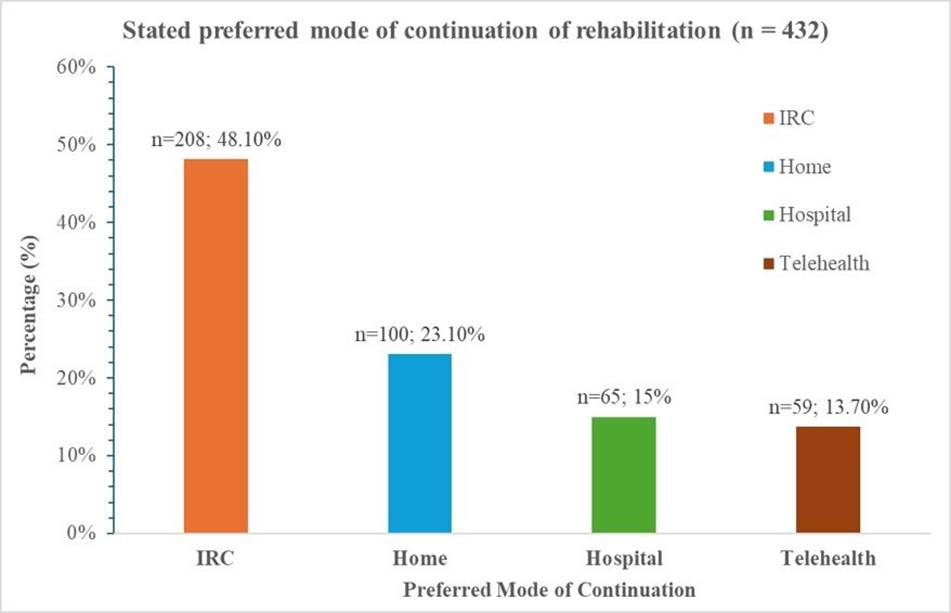
Fig. 1: Stated preferred mode of continuation of rehabilitation (n = 432)
Views regarding continued IRC care
The findings show consistently favourable views toward continued IRC care, with 70.6%–77.1% of participants responding positively across the items. The highest proportion of agreement was for preferring IRC care over hospital care when insurance coverage is provided (77.1%), followed by perceptions of greater safety regarding hospital-acquired infections (76.4%) and reduced frequent OPD visits (76.2%).
| Variable | Category | n (%) |
|---|---|---|
| Age (years) | Mean ± SD | 56.17 ± 18.07 |
| Range | 20–88 years | |
| Gender | Male | 235 (54.4) |
| Female | 197 (45.6) | |
| Employment type | Private | 214 (49.5) |
| Self-employed | 114 (26.4) | |
| Public | 36 (8.3) | |
| Other | 68 (15.7) | |
| Marital status | Married | 233 (53.9) |
| Unmarried | 95 (22.0) | |
| Widowed | 72 (16.7) | |
| Separated | 17 (3.9) | |
| Divorced | 15 (3.5) | |
| Education level | University | 170 (39.4) |
| School | 122 (28.2) | |
| Pre-university | 101 (23.4) | |
| No formal education | 39 (9.0) | |
| Primary clinical condition | Injuries and trauma | 155 (35.9) |
| Surgery | 123 (28.5) | |
| Disease-based conditions | 87 (20.1) | |
| Other illnesses | 67 (15.5) | |
| Time since injury/illness | <1 year | 87 (20.1) |
| 1–2 years | 88 (20.4) | |
| 2–3 years | 102 (23.6) | |
| 3–4 years | 155 (35.9) | |
| Previous admissions | First time | 119 (27.5) |
| Second time | 101 (23.4) | |
| Third time | 116 (26.9) | |
| >3 times | 96 (22.2) | |
| Patient risk category | Low risk | 126 (29.2) |
| Moderate risk | 140 (32.4) | |
| High risk | 166 (38.4) | |
| Payment mode | Insurance | 139 (32.2) |
| Other source | 101 (23.4) | |
| Loan | 98 (22.7) | |
| Self | 94 (21.8) | |
| Length of stay | <1 week | 103 (23.8) |
| 1–2 weeks | 86 (19.9) | |
| 2–4 weeks | 116 (26.9) | |
| >4 weeks | 127 (29.4) |
Table 1: Participant characteristics of the study population (n = 432)
About three-quarters of participants also agreed that IRC care could support faster recovery (73.9%), reduce dependence on caretakers/family (75.0%), and provide better care for activities of daily living than hospital care (75.0%). Overall, negative responses remained below 14% for all items, while unsure responses ranged from 10.9% to 16.9% ([Table. 3]).
| Preferred mode of continuation | n | % |
|---|---|---|
| Continue in an inpatient rehabilitation centre (IRC) | 208 | 48.1 |
| Continue through home healthcare supported by the IRC | 100 | 23.1 |
| Continue hospital-based care | 65 | 15 |
| Continue through telehealth supported by the IRC | 59 | 13.7 |
| Total | 432 | 100 |
Table 2: Stated preferred mode of post-hospitalisation rehabilitation continuation (n = 432)
Views regarding continuation of rehabilitation through home healthcare
The results indicate strong support for continuation of rehabilitation through home healthcare, with 78.0% preferring home healthcare as an extension of IRC-based care and 77.5% supporting it when cost-effective. Continuity of rehabilitation was strongly supported, with 82.6% agreeing that transition from inpatient rehabilitation to home-based rehabilitation would aid faster and better recovery. Perceived benefits included reduced caretaker responsibility (75.6%), improved psychological support through continuity with the same therapist/nurse (81.7%), and greater emergency access when healthcare professionals are located nearby (79.8%). A similar 81.7% preferred IRC-supported home healthcare with diagnostic and mobility/ambulance services ([Table. 4]).
Views regarding continuation of rehabilitation through telehealth
Among IRC patients, 80.6% expressed willingness to continue rehabilitation through telehealth therapy or consultation. At the same time, 78.5% identified digital resources as a concern, while 79.6% felt that digital healthcare could compromise privacy. Perceived benefits included cost-effectiveness of telehealth (75.5%), psychological support through frequent communication (74.8%), and faster recovery with frequent monitoring (72.5%). However, 74.1% also felt that telehealth consultation could compromise the quality of care, indicating both substantial acceptance and notable concerns regarding digital access, privacy, and quality of care ([Table. 5]).
| No. | Item | Response category |
n | % |
|---|---|---|---|---|
| 1 | Are you happy to continue with the same hospital for your rehabilitation care towards recovery? | Yes | 326 | 75.5 |
| No | 59 | 13.7 | ||
| Unsure | 47 | 10.9 | ||
| 2 | Would you prefer to have an exclusive inpatient rehabilitation centre and patient care for treatment outside the hospital? | Yes | 305 | 70.6 |
| No | 54 | 12.5 | ||
| Unsure | 73 | 16.9 | ||
| 3 | Do you think that an inpatient rehabilitation centre and patient care will help faster recovery? | Yes | 322 | 73.9 |
| No | 48 | 11 | ||
| Unsure | 66 | 15.1 | ||
| 4 | Do you prefer to take inpatient rehabilitation centre and patient care if it is cost effective? | Yes | 328 | 75.9 |
| No | 48 | 11.1 | ||
| Unsure | 56 | 13 | ||
| 5 | Would you like to opt for personalized care-taker/attendant at inpatient rehabilitation centre and patient care? | Yes | 318 | 73.6 |
| No | 53 | 12.3 | ||
| Unsure | 61 | 14.4 | ||
| 6 | Do you prefer post-hospital care through inpatient rehabilitation centre and patient care where 24/7 support is provided for faster recovery under one roof by physical therapist/occupational therapist/speech therapist/nurse/psychologist/dietician/on-call physician, etc.? | Yes | 325 | 75.2 |
| No | 56 | 13 | ||
| Unsure | 51 | 11.8 | ||
| 7 | Do you believe that the inpatient rehabilitation centre and patient care is safer in terms of hospital-acquired infections compared to inpatient facility at hospital? | Yes | 330 | 76.4 |
| No | 37 | 8.6 | ||
| Unsure | 65 | 15 | ||
| 8 | Do you think that the inpatient rehabilitation centre and patient care will bring down frequent OPD visits in post-hospital recovery stage? | Yes | 329 | 76.2 |
| No | 42 | 9.7 | ||
| Unsure | 61 | 14.1 | ||
| 9 | Do you think that inpatient rehabilitation centre and patient care will reduce dependence on caretaker/family? | Yes | 324 | 75 |
| No | 46 | 10.6 | ||
| Unsure | 62 | 14.4 | ||
| 10 | Do you feel that the inpatient rehabilitation centre and patient care for activities of daily living will be better than the hospital care? | Yes | 324 | 75 |
| No | 46 | 10.6 | ||
| Unsure | 62 | 14.4 | ||
| 11 | If insurance coverage is provided, would you prefer the inpatient rehabilitation centre and patient care over hospital care? | Yes | 333 | 77.1 |
| No | 49 | 11.3 | ||
| Unsure | 50 | 11.6 |
Table 3: Views of IRC patients regarding continued IRC care (n = 432)
|
No. |
Item | Response category |
n | % |
|---|---|---|---|---|
| 1 | Do you prefer, if inpatient rehabilitation centre and patient care is extended via home healthcare service for long/short-term condition for your recovery? | Yes | 337 | 78.0 |
| No | 47 | 10.9 | ||
| Unsure | 48 | 11.1 | ||
| 2 | Do you feel that home healthcare professionals supported by inpatient rehabilitation centre and patient care will offer better quality of care? | Yes | 332 | 76.9 |
| No | 51 | 11.8 | ||
| Unsure | 49 | 11.3 | ||
| 3 | Would you like to take up home healthcare services supported by inpatient rehabilitation centre and patient care if it is cost-effective? | Yes | 335 | 77.5 |
| No | 53 | 12.3 | ||
| Unsure | 44 | 10.2 | ||
| 4 | Do you agree that the support extended by inpatient rehabilitation centre and patient care via home healthcare services will reduce the responsibility of caretaker? | Yes | 322 | 75.6 |
| No | 51 | 12.0 | ||
| Unsure | 53 | 12.4 | ||
| 5 | Do you agree further continuity of inpatient rehabilitation to your home-based rehabilitation will aid in faster and better recovery? | Yes | 352 | 82.6 |
| No | 44 | 10.3 | ||
| Unsure | 30 | 7.0 | ||
| 6 | Do you agree that the location of healthcare professional for home healthcare services nearest to your location will be an advantage in an emergency? | Yes | 340 | 79.8 |
| No | 44 | 10.3 | ||
| Unsure | 42 | 9.9 | ||
| 7 | Do you feel that frequent visits by home healthcare professionals through inpatient rehabilitation centre and patient care will help in psychological aspects if the same therapist/nurse continues the service? | Yes | 348 | 81.7 |
| No | 46 | 10.8 | ||
| Unsure | 32 | 7.5 | ||
| 8 | Do you prefer home healthcare services that are extended via inpatient rehabilitation centre and patient care for its diagnostic and mobility/ambulance services? | Yes | 348 | 81.7 |
| No | 44 | 10.3 | ||
| Unsure | 34 | 8.0 |
Table 4: Views of IRC patients regarding continuation of rehabilitation through home healthcare (n = 432)
| No. | Item | Response category | n | % |
|---|---|---|---|---|
| 1 | Would you prefer inpatient rehabilitation centre and patient care that is further continued with telehealth care therapy/consultation? | Yes | 348 | 80.6 |
| No | 40 | 9.3 | ||
| Unsure | 44 | 10.2 | ||
| 2 | Do you feel digital resources are a concern for telehealth consultation treatment? | Yes | 339 | 78.5 |
| No | 41 | 9.5 | ||
| Unsure | 52 | 12.0 | ||
| 3 | Do you feel that telehealth consultation will compromise the quality of care for patient recovery? | Yes | 320 | 74.1 |
| No | 46 | 10.6 | ||
| Unsure | 66 | 15.3 | ||
| 4 | Do you feel that telehealth consultation will be cost-effective for getting consultation? | Yes | 326 | 75.5 |
| No | 49 | 11.3 | ||
| Unsure | 57 | 13.2 | ||
| 5 | Do you feel that frequent monitoring through telehealth will help in faster recovery? | Yes | 313 | 72.5 |
| No | 56 | 13.0 | ||
| Unsure | 63 | 14.6 | ||
| 6 | Do you feel that telehealth will help to improve patient psychology by frequent communication by inpatient rehabilitation centre and patient care? | Yes | 323 | 74.8 |
| No | 48 | 11.1 | ||
| Unsure | 61 | 14.1 | ||
| 7 | Do you think that digital mode of healthcare is compromising privacy by any means? | Yes | 344 | 79.6 |
| No | 44 | 10.2 | ||
| Unsure | 44 | 10.2 |
Table 5: Views of IRC patients regarding continuation of rehabilitation through telehealth (n = 432)
Preferred continuation mode according to selected participant characteristics
Preference for continuation across IRC, home healthcare, telehealth, and hospital-based care was significantly associated with almost all examined demographic and clinical characteristics, with the exception of the primary clinical condition ([Table. 6]). Age group demonstrated the strongest association with preferred continuation mode (p < 0.001, Cramer’s V = 0.361). Continued IRC care was most frequently reported among older participants, selected by 74.8% of those aged 60–79 years and 66.7% of those aged 80–88 years, whereas none in these older groups preferred home healthcare. Conversely, IRC-supported home healthcare was the most common preference among younger participants aged 20–39 years (51.2%).
Clinical circumstances and healthcare utilization were also significantly associated with preference. IRC continuation was more frequently selected by participants with a high clinical risk (63.9%) compared to those with low risk (24.6%), and by those with a longer duration since injury (69.7% for 3–4 years vs. 25.3% for <1 year) (p < 0.001). Similarly, participants with more than three previous admissions preferred IRC continuation (55.2%), while first-time admitted patients most frequently preferred home healthcare (42.9%) (p < 0.001). Furthermore, preference varied significantly by payment mode (p < 0.001); IRC continuation was highest among participants using insurance (69.1%), while home healthcare preference was highest among those utilizing loans (37.8%).
| Participant characteristics |
Category | Continue in IRC, n (%) |
IRC-supported home healthcare, n (%) |
IRC-supported telehealth, n (%) |
Continue hospital-based care, n (%) |
χ² (df) |
p- value |
Cramer’s V |
|---|---|---|---|---|---|---|---|---|
| Age group | 20–39 years (n=84) | 0 (0) | 43 (51.2) | 19 (22.6) | 22 (26.2) | 168.451 (9) | <0.001 | 0.361 |
| 40–59 years (n=156) | 68 (43.6) | 57 (36.5) | 14 (9.0) | 17 (10.9) | ||||
| 60–79 years (n=147) | 110 (74.8) | 0 (0) | 19 (12.9) | 18 (12.2) | ||||
| 80–88 years (n=45) | 30 (66.7) | 0 (0) | 7 (15.6) | 8 (17.8) | ||||
| Gender | Male (n = 235) | 136 (57.9) | 39 (16.6) | 31 (13.2) | 29 (12.3) | 22.268 (3) | <0.001 | 0.227 |
| Female (n = 197) | 72 (36.5) | 61 (31.0) | 28 (14.2) | 36 (18.3) | ||||
| Primary clinical condition | Injuries and trauma (n = 155) | 73 (47.1) | 39 (25.2) | 22 (14.2) | 21 (13.5) | 7.850 (9) | 0.549 | 0.078 |
| Surgery (n = 123) | 59 (48.0) | 29 (23.6) | 18 (14.6) | 17 (13.8) | ||||
| Disease-based conditions (n = 87) | 45 (51.7) | 20 (23.0) | 12 (13.8) | 10 (11.5) | ||||
| Other illnesses (n = 67) | 31 (46.3) | 12 (17.9) | 7 (10.4) | 17 (25.4) | ||||
| Time since injury/illness | <1 year (n = 87) | 22 (25.3) | 34 (39.1) | 16 (18.4) | 15 (17.2) | 74.780 (9) | <0.001 | 0.240 |
| 1–2 years (n = 88) | 27 (30.7) | 36 (40.9) | 10 (11.4) | 15 (17.0) | ||||
| 2–3 years (n = 102) | 51 (50.0) | 15 (14.7) | 19 (18.6) | 17 (16.7) | ||||
| 3–4 years (n = 155) | 108 (69.7) | 15 (9.7) | 14 (9.0) | 18 (11.6) | ||||
| Previous admissions | First time (n = 119) | 34 (28.6) | 51 (42.9) | 15 (12.6) | 19 (16.0) | 47.657 (9) | <0.001 | 0.192 |
| Second time (n = 101) | 52 (51.5) | 23 (22.8) | 15 (14.9) | 11 (10.9) | ||||
| Third time (n = 116) | 69 (59.5) | 15 (12.9) | 16 (13.8) | 16 (13.8) | ||||
| >3 times (n = 96) | 53 (55.2) | 11 (11.5) | 13 (13.5) | 19 (19.8) | ||||
| Patient risk category | Low risk (n = 126) | 31 (24.6) | 52 (41.3) | 18 (14.3) | 25 (19.8) | 55.145 (6) | <0.001 | 0.253 |
| Moderate risk (n = 140) | 71 (50.7) | 30 (21.4) | 19 (13.6) | 20 (14.3) | ||||
| High risk (n = 166) | 106 (63.9) | 18 (10.8) | 22 (13.3) | 20 (12.0) | ||||
| Payment mode | Self (n = 94) | 31 (33.0) | 35 (37.2) | 15 (16.0) | 13 (13.8) | 61.234 (9) | <0.001 | 0.217 |
| Loan (n = 98) | 32 (32.7) | 37 (37.8) | 16 (16.3) | 13 (13.3) | ||||
| Insurance (n = 139) | 96 (69.1) | 13 (9.4) | 10 (7.2) | 20 (14.4) | ||||
| Other source (n = 101) | 49 (48.5) | 15 (14.9) | 18 (17.8) | 19 (18.8) |
Table 6: Preferred continuation mode by selected participant characteristics (n = 432)
DISCUSSION
In this study of 432 patients already receiving inpatient rehabilitation centre (IRC) care, continued rehabilitation within an IRC was the most frequently stated preferred mode (48.1%), followed by IRC-supported home healthcare (23.1%), hospital-based care (15.0%), and telehealth (13.7%). The responses regarding continued IRC care were generally favourable: 73.9% felt that IRC care would help faster recovery, 76.4% considered it safer regarding hospital-acquired infections, 76.2% felt it could reduce frequent OPD visits, and 77.1% preferred IRC care over hospital care when insurance coverage was available. These findings indicate substantial support for continuing rehabilitation through IRCs while also showing considerable interest in home-based and telehealth options. Views towards IRC-supported home healthcare were similarly favourable. More than three-quarters supported continuation through home healthcare (78.0%), considered continuity from IRC to home rehabilitation beneficial for recovery (82.6%), and viewed nearby healthcare professionals as advantageous during emergencies (79.8%). Continuity with the same therapist or nurse was supported in relation to psychological aspects by 81.7% of participants. Telehealth continuation was also supported by 80.6%, although concerns about digital resources (78.5%), possible compromise in quality of care (74.1%), and privacy (79.6%) were common.
The preference for continuing rehabilitation within an IRC is broadly consistent with literature showing that patients may value supervised, facility-based rehabilitation
because of access to professional support, structured rehabilitation environments, and rehabilitation resources. A systematic review of cardiac rehabilitation preferences found that many patients preferred hospital-based rehabilitation over home-based rehabilitation, although preferences varied according to individual circumstances and characteristics[6, 7]. The present findings similarly show that IRC continuation remained the single most frequently selected option, despite substantial interest in alternatives.At the same time, the relatively high support for IRC-supported home healthcare is consistent with evidence that home-based rehabilitation may be perceived as convenient and less disruptive to everyday activities[8, 9]. Qualitative evidence also indicates that home rehabilitation can support self-management and may be particularly attractive when travel, transportation, or caregiver-related considerations are relevant[10, 11]. However, previous studies also indicate that patients may value at least some face-to-face contact because of the importance of interpersonal interaction and because some rehabilitation activities cannot readily be delivered remotely[12].
The high level of stated support for telehealth continuation is also consistent with previous literature describing telerehabilitation as an increasingly acceptable component of rehabilitation pathways. Systematic evidence suggests that acceptance of telerehabilitation can be supported by convenience, accessibility, financial considerations, and willingness to use technology, while connectivity, digital literacy, device affordability, and privacy can remain concerns[12, 13]. The present study showed this combination clearly: 80.6% preferred continuation with telehealth, while 78.5% reported concerns regarding digital resources and 79.6% expressed concern about privacy. These findings are the patient-reported views rather than evidence that telehealth provides equivalent clinical outcomes in this population. The preference for IRC continuation may reflect the characteristics of this patient group, which included a substantial proportion of participants with injuries and trauma, surgery, moderate or high clinical risk, and ongoing rehabilitation needs. Participants also reported favourable views of multidisciplinary and continuous care, with 75.2% supporting post-hospital care through an IRC providing 24/7 access to rehabilitation and healthcare professionals. In this context, some patients may perceive continued IRC care as the most familiar or comprehensive continuation pathway. This interpretation is consistent with previous studies indicating that patients' rehabilitation preferences can relate to the perceived availability of professional supervision, facilities, social interaction, and support[10, 14, 15].
The findings also suggest that home healthcare and telehealth may be viewed as complementary continuation options rather than necessarily replacing IRC care. The strong support for continuity from IRC to home-based rehabilitation (82.6%) and for frequent communication through telehealth (74.8% reporting perceived psychological benefit) indicates that participants valued continued contact with rehabilitation services beyond the facility. Evidence from qualitative research similarly suggests that home-based and telehealth rehabilitation can provide accessibility and convenience, but that the preferred model may depend on individual needs, home circumstances, technology, and the type of rehabilitation required[16, 17]. The bivariate analyses revealed highly significant associations that provide critical context for these overall preferences. The strong association between age and preferred continuation mode with older adults overwhelmingly favoring facility-based IRC care and younger adults leaning toward home healthcare suggests that age-related mobility, frailty, or caregiver availability may heavily shape patients' views on safe recovery environments. This aligns with the finding that patients categorized as high-risk and those with a longer history of injury or hospital admissions significantly preferred the structured, supervised environment of an IRC.
Conversely, the preference for home healthcare was most prominent among younger, lower-risk, and first-time admission patients. For these groups, the convenience, independence, and lower disruption to daily life offered by home-based care may outweigh the perceived need for constant on-site clinical supervision. Crucially, payment mode was strongly associated with patient preference. The finding that nearly 70% of participants with insurance preferred continued IRC care, whereas those relying on loans showed the highest preference for home healthcare (37.8%), highlights the potential role of financial accessibility. Patients may prefer the comprehensive nature of IRCs when out-of-pocket financial burdens are mitigated by insurance but may seek more cost-effective home-based alternatives when facing direct financial strain.
Clinical and policy implications: The findings may be useful for planning patient-centred continuation pathways linked to IRCs. The relatively high support for home healthcare and telehealth suggests that continuation services could be considered alongside facility-based IRC care, with options tailored to patients' preferences and circumstances. Home healthcare planning may need to consider continuity with rehabilitation professionals, emergency accessibility, and support for caregivers, while telehealth planning may need to address digital access, privacy, and perceived quality of care[2-4]. Payment mode also warrants attention when considering service preferences. The descriptive variation across payment categories, together with the high proportion of participants reporting support for IRC care when insurance coverage was available (77.1%), indicates that financial access is an important consideration in how continuation services are viewed. However, the present study did not assess actual affordability, healthcare expenditure, service utilisation, or clinical outcomes. Therefore, the findings should inform consideration of service preferences rather than be interpreted as evidence regarding cost-effectiveness, clinical effectiveness, resource utilisation, or scalability.
Strengths and limitations: The study has several strengths, including a relatively large sample size, comprehensive assessment of participants’ preferences and views across IRC, home healthcare, and telehealth, and the use of both descriptive and selected bivariate analyses. However, the cross-sectional design prevents causal inference, and preferences may change over time. The single-city, facility-based convenience sample limits generalisability, while self-reported responses may be subject to recall and social desirability bias. The investigator-developed questionnaire was not externally validated, and functional status, rehabilitation outcomes, accessibility, and satisfaction were not assessed. Because all participants were already receiving IRC care, the findings reflect the views of this facility-based sample and should not be generalized to all post-hospitalisation patients in Bangalore.
CONCLUSION
Among patients already receiving IRC care, most preferred to continue their rehabilitation through the IRC, with substantial support also reported for IRC-supported home healthcare and telehealth as continuation options. Furthermore, preferences were significantly associated with participant characteristics, including age, clinical risk category, time since injury, previous hospital admissions, and payment mode. These findings represent patient-reported preferences and views and should not be interpreted as evidence of clinical effectiveness or rehabilitation outcomes. The findings describe patient-reported continuation preferences within the surveyed IRC population and may provide context for tailoring future patient-centred pathways in similar settings. Broader population-based and prospective studies are needed to assess generalisability and further examine these preferences across diverse post-hospitalisation populations.
DISCLOSURE
Acknowledgements
The authors acknowledge all individuals who contributed to this study. Their support included assistance with data collection, administrative coordination, and logistical support during the study period. All individuals named in the acknowledgements have provided consent to be acknowledged.
Funding/Support
This study did not receive any specific grant from funding agencies in the public, commercial, or not-for-profit sectors.
Author Contributions
SPI conceived the study, designed the research, performed data collection, analyzed and interpreted the data, and drafted the manuscript. MK supervised research design and data collection and reviewed the manuscript. All authors reviewed the manuscript critically, approved the final version, and accepted responsibility for the integrity of the work.
Ethics Approval
Ethical approval was obtained from the Research Ethics Principles & Committee, Sri Venkateshwara University (IRB reference no. SVU/DOC/MBA/2022-23/09/145, dated 15.06.2022). The study was conducted in accordance with the ethical principles of the Declaration of Helsinki (2013), and written informed consent was obtained from all participants prior to data collection.
Data Availability
Data generated during the study may be made available from the corresponding author on reasonable request, subject to applicable ethical and institutional requirements.
References
1. World Health Organization. WHO: Rehabilitation. Geneva: World Health Organization; 2024. Available from: https://www.who.int/news-room/fact-sheets/detail/rehabilitation
2. World Health Organization. Rehabilitation and Functioning in the 2030 Agenda. Geneva: World Health Organization. 2026; Available from: https://www.who.int/publications/m/item/rehabilitation-and-functioning-in-the-2030-agenda
3. Htwe O, Yuliawiratman BS, Tannor AY, Nor Asikin MZ, Soh E, De Groote W, et al. Barriers and facilitators for increased accessibility to quality rehabilitation services in low- and middle- income countries: a systematic review. European Journal of Physical and Rehabilitation Medicine. 2024; 60 (3). Available from: https://doi.org/10.23736/s1973-9087.24.08154-1
4. Waterworth CJ, Smith F, Kiefel-Johnson F, Pryor W, Marella M. Integration of rehabilitation services in primary, secondary, and tertiary levels of health care systems in low- and middle-income countries: a scoping review. Disability and Rehabilitation. 2024; 46 (25). Available from: https://doi.org/10.1080/09638288.2024.2317422
5. Yun D, Choi J. Person-centered rehabilitation care and outcomes: A systematic literature review. International Journal of Nursing Studies. 2019; 93 Available from: https://doi.org/10.1016/j.ijnurstu.2019.02.012
6. Karisa P, Sylviana N, Syamsunarno MR, Fitria N, Tiksnadi B, Setiawan S. Comparative Systematic Review of Home-Based and Center-Based Cardiac Rehabilitation of Delivery Models and Outcomes. Patient Preference and Adherence. 2026; Volume 20 Available from: https://doi.org/10.2147/ppa.s581645
7. AlHarbi S, Khan SS, Moallem AA, Allagani RM, Al Sari RR, Gubari MS, et al. Cardiac Rehabilitation: A Literature Review of Benefits, Challenges, and Emerging Approaches. Cureus. 2025; Available from: https://doi.org/10.7759/cureus.95648
8. Zhou H, Li C, Niu F, Liu W, Qiu X, Yang G, et al. Barriers and facilitators to adherence to home-based pulmonary rehabilitation in patients with chronic obstructive pulmonary disease: a mixed-methods systematic review. BMC Nursing. 2025; 24 (1). Available from: https://doi.org/10.1186/s12912-025-03940-x
9. Williamson TM, Campbell TS, Seidel S, King-Shier K, Wilton SB, Tomfohr-Madsen L, et al. A Qualitative Investigation of Barriers, Facilitators, and Preferences Regarding a Cardiac Rehabilitation-Based Behavioral Weight Loss Program in Adults with Atrial Fibrillation and Obesity. Behavioral Medicine. 2026; Available from: https://doi.org/10.1080/08964289.2026.2641456
10. Wu L, Song Y, Zhang R, Lou S, Di Q, Shi Q, et al. Exploring the experience of community hospital-led home-based cardiac rehabilitation health management in patients with coronary heart disease: a qualitative focus group study. Frontiers in Cardiovascular Medicine. 2026; 12 Available from: https://doi.org/10.3389/fcvm.2025.1748801
11. Su P, Tang Q, Li Y, Chang F, Feng X, Wu X. Facilitators and Barriers to Adherence to Home-Based Cardiac Rehabilitation Exercise in Patients with Chronic Heart Failure: A Qualitative Study. Patient Preference and Adherence. 2026; Volume 20 Available from: https://doi.org/10.2147/ppa.s602742
12. Muniandy Y, Karuppiah K, Romli MH, Vasanthi RK, Ali NF, Subramaniam T, et al. A Meta-Synthesis on Clients’ Experience with Telerehabilitation. Healthcare. 2026; 14 (6). Available from: https://doi.org/10.3390/healthcare14060717
13. Stahn M, Roemhild M, Kopkow C, Rausch A-K. Barriers and facilitators to telerehabilitation implementation: a mixed-methods study of German physiotherapists. BMC Health Services Research. 2026; 26 (1). Available from: https://doi.org/10.1186/s12913-026-14636-6
14. Mauriello A, Correra A, Maratea AC, Russo V, Liccardo B, Gragnano F, et al. The Evolution of Cardiac Rehabilitation from Supervised Models to New Frontiers in Digital Health. Journal of Clinical Medicine. 2026; 15 (7). Available from: https://doi.org/10.3390/jcm15072515
15. Rahja M, Crotty M, Greene L, Leung C, Wong VV, Whitehead C, et al. Patient and informal carer experiences of receiving care through a virtual rehabilitation ward: a qualitative study. Disability and Rehabilitation. 2026; Available from: https://doi.org/10.1080/09638288.2026.2678075
16. Lu N, Li M, Gou X, Yang T, Li W, Yan L, et al. Exploring the experience and needs of telerehabilitation in patients with spinal cord injury: a systematic review and thematic synthesis of qualitative research. Spinal Cord. 2026; 64 (2). Available from: https://doi.org/10.1038/s41393-025-01161-2
17. Adamson A, Kwok H, Singh SJ, Wilkinson TMA, Drover H, Quint JK. The characteristics of people with COPD who enrol in home-based pulmonary rehabilitation versus centre-based pulmonary rehabilitation: A nationwide cross-sectional study. Chronic Respiratory Disease. 2026; 23 Available from: https://doi.org/10.1177/14799731261431253
Copyright
© 2026 Published by Laxmi Memorial Education Trust. This is an open-access article under CC BY 4.0 license. (https://creativecommons.org/licenses/by/4.0/)
Cite this article
Samuel Paul Isaac, Manish Kumar. Patient Preferences for Continuation of Post-Hospitalisation Rehabilitation Through Inpatient Rehabilitation Centres, Home Healthcare and Telehealth: A Cross-Sectional Survey in Bangalore. AJ J Med Sci 2026;3(3):115-125