Volume: 3 Issue: 3
Virtual Reality Rehabilitation-Related Complications in Neurological Disorders: A Scoping Review
Year: 2026, Page: 74-86, Doi: https://doi.org/10.71325/ajjms.v3i3.26.38
Received: Aug. 11, 2026 Accepted: Aug. 21, 2026 Published: Sept. 5, 2026
Abstract
Virtual reality (VR) has emerged as an innovative tool in neurorehabilitation, providing immersive and interactive environments that enhance motor, cognitive, and functional recovery in individuals with neurological disorders. Despite its therapeutic benefits, VR may induce adverse effects, including cybersickness, balance disturbances, and disorder-specific complications, which may limit its clinical application. This scoping review aimed to map the existing evidence on VR-related complications in neurological disorders and summarize the reported adverse events, assessment methods, and safety strategies. A scoping review was conducted in accordance with the Preferred Reporting Items for Systematic Reviews and Meta-Analyses Extension for Scoping Reviews (PRISMA-ScR) guidelines. A comprehensive literature search was performed in PubMed, Google Scholar, and SciSpace for studies published between January 2016 and March 2026. Eligible studies included immersive or non-immersive VR interventions in neurological populations that reported adverse events or safety outcomes. Data were extracted using a standardized form and synthesized using a descriptive narrative approach. The search identified 121 records, of which 13 studies met the inclusion criteria. The included studies involved individuals with multiple sclerosis, Parkinson's disease, stroke, traumatic and acquired brain injury, spinal cord injury, cerebral palsy, hereditary ataxia, dementia, and epilepsy. Cybersickness, characterized by nausea, dizziness, headache, blurred vision, eye strain, fatigue, and disorientation, was the most frequently reported complication. Disorder-specific adverse events included postural instability and fatigue in multiple sclerosis, falls and visual hallucinations in Parkinson's disease, oculomotor disturbances following brain injury, and photosensitive seizure risk in epilepsy. Most adverse events were mild, transient, and effectively managed through supervised rehabilitation, shorter VR sessions, standardized monitoring, and individualized treatment protocols. Virtual reality is generally a safe and feasible adjunct to neurorehabilitation when appropriate safety measures are implemented. Nevertheless, disorder-specific risks require careful patient selection, clinical monitoring, and individualized intervention strategies. Future research should prioritize long-term safety evaluation, standardized adverse-event reporting, and the development of evidence-based clinical guidelines to support the safe integration of VR into neurological rehabilitation.
Keywords: Virtual reality; Neurorehabilitation; Cybersickness; Neurological disorders; Simulator Sickness
INTRODUCTION
Neurological disorders represent one of the leading causes of disability worldwide and are associated with substantial physical, cognitive, psychological, and socioeconomic burdens. Conditions such as stroke, Parkinson's disease (PD), multiple sclerosis (MS), traumatic brain injury (TBI), spinal cord injury (SCI), cerebral palsy (CP), hereditary ataxia, dementia, and epilepsy often result in long-term impairments that significantly reduce independence and quality of life. Rehabilitation plays a fundamental role in restoring motor function, improving cognitive performance, enhancing balance and mobility, and facilitating participation in activities of daily living. However, conventional rehabilitation frequently faces limitations including reduced patient motivation, insufficient training intensity, limited opportunities for repetitive task practice, and restricted access to individualized therapy. Consequently, researchers and clinicians have increasingly explored technology-assisted rehabilitation approaches capable of delivering engaging, intensive, and patient-centered interventions[1].
Among these technologies, virtual reality (VR) has emerged as one of the most promising innovations in neurorehabilitation. VR is a computer-generated interactive environment that allows users to experience and interact with simulated three-dimensional worlds through visual, auditory, and sometimes tactile feedback. Depending on the level of immersion, VR systems are generally classified as non-immersive, semi-immersive, and fully immersive systems. Non-immersive systems typically employ standard computer screens or gaming consoles such as the Nintendo Wii or Microsoft Kinect, whereas fully immersive systems utilize head-mounted displays (HMDs) including Oculus Rift, Meta Quest, HTC Vive, and similar devices to create a highly realistic sense of presence within the virtual environment. These immersive technologies provide multisensory stimulation that enhances user engagement, increases motivation, and enables repetitive practice of functional tasks in safe and controlled environments[2].
The growing interest in VR-based rehabilitation is supported by its ability to promote neuroplasticity, the capacity of the nervous system to reorganize neural pathways in response to repeated practice and sensory feedback. VR facilitates motor relearning through task-specific training, real-time visual and auditory feedback, adaptive difficulty levels, and enriched environments that encourage active participation. In addition to improving motor performance, VR interventions have demonstrated benefits in cognitive rehabilitation, balance training, gait rehabilitation, upper limb recovery, pain management, and psychological well-being across various neurological conditions. Patients often report greater enjoyment and motivation during VR sessions compared with conventional physiotherapy, contributing to improved adherence and potentially superior rehabilitation outcomes[2-4].
Recent advances in immersive VR have further expanded its therapeutic applications by creating realistic simulations of activities of daily living that would otherwise be difficult or unsafe to practice in clinical settings. Patients recovering from stroke can repeatedly practice reaching, walking, obstacle negotiation, and object manipulation in customized environments, while individuals with Parkinson's disease may benefit from gait cueing, balance exercises, and dual-task cognitive training. Similarly, patients with multiple sclerosis can perform upper-limb rehabilitation and functional mobility exercises using engaging virtual tasks specifically designed to address fatigue and coordination deficits. Personalized VR systems capable of adapting training difficulty according to individual performance have also been developed, thereby improving patient engagement and maximizing therapeutic effectiveness[5, 6].
Despite these considerable therapeutic advantages, increasing evidence indicates that VR is not entirely free from adverse effects. The immersive nature of VR can induce a range of physiological, neurological, and psychological complications collectively referred to as VR-related adverse events or cybersickness. Cybersickness is considered one of the most frequently reported complications during immersive VR exposure and is characterized by symptoms including nausea, dizziness, headache, blurred vision, disorientation, eye strain, sweating, fatigue, and balance disturbances. Although many of these symptoms are transient and resolve shortly after exposure, they may reduce patient comfort, interrupt rehabilitation sessions, decrease treatment adherence, and, in severe cases, increase the risk of injury[7].
The principal explanation for cybersickness is the Sensory Conflict Theory, which proposes that adverse symptoms arise when conflicting information is received from the visual, vestibular, and proprioceptive systems. During immersive VR experiences, users may perceive movement through visual cues while their vestibular system detects little or no corresponding physical motion. This mismatch creates sensory conflict within the central nervous system, leading to autonomic responses such as nausea, dizziness, sweating, and disorientation. The intensity of cybersickness is influenced by several factors including the duration of VR exposure, display latency, field of view, frame rate, navigation techniques, user characteristics, and the complexity of the virtual environment[7, 8].
Individuals with neurological disorders may be particularly susceptible to these adverse effects because many neurological diseases inherently involve impairments in sensory integration, vestibular processing, balance control, visual perception, cognition, and autonomic regulation. For example, people with multiple sclerosis frequently exhibit impaired postural stability, visual dysfunction, and fatigue, all of which may amplify the sensory conflicts generated during immersive VR exposure. Pau, et al. reported that individuals with MS experienced blurred vision, nausea, dizziness, headache, and increased postural sway following immersive VR sessions, while Kalron, et al. observed that fatigue contributed to discontinuation of training in a proportion of participants undergoing VR-based upper limb rehabilitation[1, 2]. These findings suggest that neurological impairments may modify both the severity and the nature of VR-related complications compared with healthy individuals.
Similarly, Parkinson's disease presents unique safety concerns associated with immersive VR rehabilitation. Patients with PD commonly experience gait disturbances, postural instability, freezing of gait, and impaired visuospatial processing, all of which may increase vulnerability during immersive virtual experiences. Pimenta Silva, et al. demonstrated that approximately 8% of immersive VR sessions were associated with adverse events including discomfort, motor fluctuations, and falls requiring immediate clinical attention[3]. Furthermore, Albani, et al. described the occurrence of visual hallucinations induced during immersive VR exposure in patients predisposed to hallucinations, suggesting that VR may interact with underlying neurodegenerative mechanisms affecting visual perception[4, 5]. Conversely, Kim, et al. reported that carefully supervised immersive walking programs were generally well tolerated and did not significantly increase simulator sickness scores, highlighting the importance of appropriate patient selection, session duration, and safety monitoring[6]. These contrasting findings emphasize that both patient characteristics and VR system design substantially influence clinical safety.
Stroke rehabilitation has become one of the most extensively investigated applications of VR. Numerous studies have demonstrated improvements in upper limb function, gait, balance, cognitive performance, and patient motivation following VR-based rehabilitation. Nevertheless, adverse effects including dizziness, headache, fatigue, transient balance impairment, and occasional cognitive overload continue to be reported, particularly during prolonged immersive sessions. Banikova, et al. found that most individuals undergoing immersive VR rehabilitation after subacute ischemic stroke reported high satisfaction and good tolerance; however, some participants experienced mild discomfort and technical limitations associated with HMD use[9]. Similarly, systematic reviews indicate that although the overall incidence of severe complications is relatively low, careful monitoring remains essential because excessive immersion may temporarily impair postural control and increase fall risk in vulnerable individuals[7].
The safety profile of VR has also been investigated in other neurological disorders including traumatic brain injury, spinal cord injury, cerebral palsy, hereditary ataxia, dementia, and epilepsy. Patients with acquired brain injuries often demonstrate increased susceptibility to oculomotor disturbances and disorientation following VR exposure. Individuals with hereditary ataxia have shown high discontinuation rates due to dizziness and nausea, whereas pediatric populations with cerebral palsy may experience eye strain, muscle fatigue, and mild discomfort during prolonged rehabilitation sessions[11]. In dementia care, immersive VR has generally been well accepted but may produce temporary confusion or discomfort among older adults with cognitive impairment[12]. For people with epilepsy, particular attention must be given to photosensitive seizures triggered by flashing visual stimuli, emphasizing the necessity of individualized screening before VR implementation[13].
As VR technology continues to evolve through improvements in graphics, motion tracking, artificial intelligence, adaptive interaction, and wireless HMD systems, its integration into neurological rehabilitation is expected to increase substantially. However, the rapid adoption of immersive VR has outpaced the development of standardized safety guidelines. Existing studies vary considerably in their reporting of adverse events, assessment methods, exposure durations, and patient populations, making it difficult for clinicians to establish evidence-based recommendations regarding safe clinical implementation. Furthermore, many rehabilitation studies focus primarily on therapeutic effectiveness while providing limited information regarding complications, tolerability, or discontinuation rates, thereby creating important knowledge gaps concerning patient safety[7].
Several standardized instruments have been developed to quantify VR-related adverse effects, including the Simulator Sickness Questionnaire (SSQ), Virtual Reality Sickness Questionnaire (VRSQ), physiological monitoring of heart rate and galvanic skin response, and objective measures of postural stability. Nevertheless, these assessment tools are not consistently employed across neurological rehabilitation studies, limiting direct comparisons between different disorders and intervention protocols. Establishing standardized reporting practices is therefore essential for accurately identifying disorder-specific risks, improving clinical decision-making, and optimizing rehabilitation protocols for diverse neurological populations.
Given the expanding role of VR in neurorehabilitation and the growing body of literature addressing its safety, a comprehensive synthesis of current evidence is warranted. While previous reviews have primarily focused on therapeutic effectiveness, relatively few have systematically examined VR-related complications across multiple neurological disorders. Mapping the available evidence is particularly important for identifying common adverse events, disorder-specific vulnerabilities, methods of safety assessment, and strategies that reduce the occurrence of complications during rehabilitation.
Therefore, this scoping review aims to systematically map the existing literature published between 2016 and 2026 regarding complications associated with virtual reality interventions in individuals with neurological disorders. Specifically, this review seeks to identify the types and frequency of adverse events reported across different neurological conditions, summarize the assessment methods used to evaluate VR-related complications, compare safety findings among neurological populations, and describe evidence-based mitigation strategies that may enhance the safe clinical implementation of virtual reality in neurorehabilitation.
METHODOLOGY
Study Design
This scoping review was conducted in accordance with the Preferred Reporting Items for Systematic Reviews and Meta-Analyses Extension for Scoping Reviews (PRISMA-ScR), developed by Tricco, et al. The PRISMA-ScR framework was selected because it provides a structured approach for systematically mapping the breadth of available evidence, identifying research gaps, and summarizing key findings without restricting the review to a specific study design. Unlike systematic reviews that primarily evaluate intervention effectiveness, scoping reviews are intended to explore the extent, range, and characteristics of evidence on an emerging topic. The present review aimed to comprehensively identify and synthesize published literature describing complications, adverse events, and safety considerations associated with virtual reality (VR) interventions in individuals with neurological disorders.
Review Objectives
The objectives of this scoping review were to: (1) Identify the neurological disorders in which virtual reality rehabilitation has been investigated, (2) Map the types of VR-related complications and adverse events reported in neurological populations, (3) Summarize the assessment tools used to evaluate cybersickness and other safety outcomes, (4) Compare the safety profile of immersive and non-immersive VR interventions, (5) Identify strategies used to prevent or minimize VR-related complications, (6) Highlight gaps in the current literature and propose recommendations for future research.
Review Question
The review was guided by the following research question: What complications and adverse events have been reported following the use of virtual reality interventions in individuals with neurological disorders, and what strategies have been employed to improve safety during neurorehabilitation?
PCC Framework
The review question was developed using the Population–Concept–Context (PCC) framework recommended by the Joanna Briggs Institute (JBI) for scoping reviews. Population (P): Individuals diagnosed with neurological disorders including stroke, Parkinson's disease, multiple sclerosis, traumatic brain injury, acquired brain injury, spinal cord injury, cerebral palsy, hereditary ataxia, dementia, epilepsy, and other neurological conditions. Concept (C): Virtual reality-related complications, adverse events, cybersickness, simulator sickness, safety, tolerability, feasibility, side effects, and risk factors. Context (C): Clinical neurorehabilitation settings utilizing immersive, semi-immersive, or non-immersive virtual reality interventions.
Search Strategy
A comprehensive literature search was conducted to identify relevant studies published between January 2016 and March 2026. The electronic databases PubMed, Google Scholar, and SciSpace were systematically searched to retrieve studies investigating virtual reality (VR)-related complications in individuals with neurological disorders. To ensure comprehensive coverage of the available evidence, the reference lists of all eligible articles were also manually screened to identify additional relevant studies that may not have been captured during the electronic database search. The search strategy was developed using a combination of Medical Subject Headings (MeSH), free-text keywords, and Boolean operators (AND, OR) to maximize search sensitivity while maintaining specificity. The primary search strategy included combinations of the following terms: "Virtual Reality" OR "Immersive Virtual Reality" AND "Neurological Disorders" OR "Stroke" OR "Parkinson Disease" OR "Multiple Sclerosis" OR "Brain Injury" OR "Spinal Cord Injury" OR "Cerebral Palsy" OR "Dementia" OR "Ataxia" OR "Epilepsy" AND "Cybersickness" OR "Simulator Sickness" OR "Safety" OR "Complications" OR "Adverse Events." The search strategy was refined iteratively by modifying keywords and Boolean combinations to maximize the retrieval of relevant studies while minimizing irrelevant records. This systematic approach ensured a comprehensive identification of the current evidence on VR-related complications in neurological rehabilitation.
Eligibility Criteria
Studies were selected according to predefined inclusion and exclusion criteria. Studies were included if they: investigated virtual reality interventions in individuals with neurological disorders; evaluated immersive, semi-immersive, or non-immersive VR systems; reported complications, adverse events, cybersickness, safety outcomes, or treatment tolerability; were original research articles, randomized controlled trials, pilot studies, feasibility studies, cohort studies, observational studies, systematic reviews, or meta-analyses; were published in peer-reviewed journals; were published in English; were published between January 2016 and March 2026.
Studies were excluded if they: included only healthy participants without neurological conditions; evaluated VR exclusively for diagnostic or educational purposes; did not report any safety outcomes or adverse events; were conference abstracts, editorials, letters, commentaries, dissertations, or unpublished reports; were published in languages other than English.
Study Selection
All records identified through database searching were exported to a reference management program, and duplicate citations were removed. Study selection was performed in two stages.
Stage 1: Title and Abstract Screening: Titles and abstracts were screened independently against the eligibility criteria. Articles clearly unrelated to virtual reality rehabilitation or neurological disorders were excluded during this stage.
Stage 2: Full-Text Review: The full text of potentially eligible articles was retrieved and evaluated independently according to the predefined inclusion and exclusion criteria. Disagreements regarding study eligibility were resolved through discussion and consensus.
The study selection process was documented using the PRISMA-ScR flow diagram.
Data Extraction
A standardized data extraction form was developed prior to data collection to ensure consistency and accuracy throughout the review process. Data were systematically extracted from each included study using a predefined template. The extracted information included the author(s), year of publication, country of origin, study design, neurological condition, sample size, participant characteristics, type of virtual reality (VR) intervention, level of immersion (immersive or non-immersive), duration of the intervention, outcome measures, assessment tools used to evaluate cybersickness (e.g., Simulator Sickness Questionnaire [SSQ] and Virtual Reality Sickness Questionnaire [VRSQ]), reported adverse events, severity of complications, safety monitoring methods, mitigation strategies employed to reduce VR-related side effects, and the main findings of each study. The extracted data were subsequently organized into summary tables to facilitate comparison across studies and to identify patterns in the occurrence, severity, and management of VR-related complications in individuals with neurological disorders.
Data Synthesis
The extracted data were synthesized using a descriptive narrative approach, consistent with the methodological recommendations of the Preferred Reporting Items for Systematic Reviews and Meta-Analyses Extension for Scoping Reviews (PRISMA-ScR). The included studies were grouped according to the neurological condition investigated, namely multiple sclerosis, Parkinson's disease, stroke, traumatic and acquired brain injury, spinal cord injury, cerebral palsy, hereditary ataxia, dementia, and epilepsy. Within each neurological condition, VR-related complications were categorized into major domains, including cybersickness symptoms (e.g., nausea, dizziness, and vomiting), oculomotor symptoms (e.g., blurred vision and eye strain), balance-related complications, cognitive symptoms, fatigue, psychological effects, falls and safety incidents, and other disorder-specific adverse events. The findings were synthesized narratively to identify common patterns, differences, and trends across neurological disorders. In addition, the frequency of reported complications, assessment methods used to evaluate adverse events, and mitigation strategies implemented to improve the safety and tolerability of VR interventions were summarized and compared across the included studies to provide a comprehensive overview of the current evidence.
Quality Appraisal
Consistent with the objectives of a scoping review and the PRISMA-ScR recommendations, a formal methodological quality assessment or risk-of-bias evaluation was not undertaken. The primary purpose of this review was to map the available evidence and identify the range of reported complications rather than determine the effectiveness of virtual reality interventions.
Reporting of Results
The study selection process will be presented using a PRISMA-ScR flow diagram. Study characteristics will be summarized in evidence tables, and findings will be synthesized narratively according to neurological disorder and type of reported complication. Tables summarizing adverse events, assessment tools, and mitigation strategies will be used to facilitate comparison across studies.
Ethical Considerations
As this study was based exclusively on previously published literature, ethical approval and informed consent were not required. All included studies were appropriately acknowledged through citation, and the review was conducted in accordance with accepted principles of research integrity and transparent reporting.
LITERATURE REVIEW
Evolution of Virtual Reality in Neurorehabilitation
Virtual reality (VR) has become an integral component of neurorehabilitation by providing interactive, task-oriented environments that enhance motor learning and neuroplasticity. Initially, rehabilitation relied on non-immersive systems such as Nintendo Wii and Kinect, which improved patient motivation and functional outcomes. Advances in head-mounted displays (HMDs) have enabled immersive VR, offering greater realism, multisensory feedback, and personalized rehabilitation programs. These systems have been successfully applied in stroke, Parkinson's disease, and multiple sclerosis rehabilitation, although increasing immersion has also raised concerns regarding cybersickness and patient safety[1-4].
Mechanisms of Virtual Reality–Related Complications (Sensory Conflict Theory)
The primary mechanism underlying VR-related compli- cations is the Sensory Conflict Theory, which suggests that cybersickness occurs when visual information conflicts with vestibular and proprioceptive inputs. During immersive VR, users may perceive movement visually while remaining physically stationary, leading to symp- toms such as nausea, dizziness, headache, blurred vision, and disorientation. Neurological disorders affecting balance, sensory integration, or cognition may increase susceptibility to these adverse effects. Factors including prolonged exposure, display latency, wide field of view, and individual neurological deficits further contribute to the severity of VR-induced complications[3, 5].
Assessment of VR Complications
Several standardized tools have been developed to evaluate VR-related adverse effects. The Simulator Sickness Questionnaire (SSQ) remains the most widely used instrument, assessing nausea, oculomotor disturbances, and disorientation. The Virtual Reality Sickness Questionnaire (VRSQ) provides a simplified assessment of visual and vestibular symptoms. Physiological measures such as heart rate, galvanic skin response (GSR), electroencephalography (EEG), and postural sway analysis are increasingly used to objectively assess cybersickness and balance impairment. These tools facilitate early identification of adverse events and support safe implementation of VR rehabilitation[1, 3].
Multiple Sclerosis
Individuals with multiple sclerosis (MS) are particularly vulnerable to VR-related complications because of impaired sensory integration, balance deficits, and fatigue. Pau, et al. reported that immersive VR commonly induced blurred vision, dizziness, nausea, headache, and increased postural sway in patients with MS. Kalron, et al. demonstrated the feasibility of VR-based upper-limb rehabilitation but noted that fatigue resulted in treatment discontinuation in some participants. Although VR improves engagement and motor performance, careful monitoring and individualized session duration are essential to minimize cybersickness and excessive fatigue in this population[1, 2].
Parkinson's Disease
Virtual reality has shown promising benefits for gait, balance, and cognitive rehabilitation in Parkinson's disease (PD). However, immersive VR may increase the risk of falls, discomfort, motor fluctuations, and visual hallucinations in susceptible individuals. Pimenta Silva, et al. reported adverse events in approximately 8% of VR sessions, including falls requiring clinical supervision. Albani, et al. described immersive VR-induced visual hallucinations in predisposed patients, whereas Kim, et al. found immersive walking programs to be generally safe when appropriate supervision and limited exposure times were implemented[4, 6, 7].
Stroke
Stroke rehabilitation has extensively adopted VR to improve upper-limb function, balance, gait, and activities of daily living. Most studies report high patient satisfaction and good treatment tolerance; however, dizziness, headache, eye strain, and temporary balance impairment remain common adverse effects, particularly following prolonged immersive sessions. Banikova, et al. observed that most subacute stroke patients tolerated VR well, although mild discomfort and technical issues occasionally interrupted therapy. Appropriate session duration, therapist supervision, and gradual progression are recommended to maximize safety and therapeutic effectiveness[3, 8].
Brain Injury (TBI/ABI)
Patients with traumatic brain injury (TBI) and acquired brain injury (ABI) demonstrate variable responses to immersive VR rehabilitation. Although several studies report good feasibility and low simulator sickness scores, systematic reviews indicate that this population may experience greater oculomotor symptoms, dizziness, and disorientation than other neurological groups. Cognitive impairment and vestibular dysfunction contribute to increased sensitivity to immersive environments. Consequently, individualized exposure times, frequent monitoring, and gradual adaptation to VR are recommended to minimize adverse effects while preserving rehabilitation benefits[3].
Spinal Cord Injury and Cerebral Palsy
VR interventions have demonstrated positive effects on upper-limb rehabilitation, balance, and functional mobility in individuals with spinal cord injury (SCI) and cerebral palsy (CP). Most reported adverse events are mild and include dizziness, eye strain, muscle fatigue, and transient discomfort. Existing systematic reviews indicate that many studies inadequately report safety outcomes, limiting conclusions regarding complication rates. Nevertheless, current evidence suggests that VR is generally safe when implemented under clinical supervision with appropriate patient selection and individualized treatment protocols[9].
Hereditary Ataxia
Patients with hereditary ataxia often experience impaired balance and coordination, increasing their susceptibility to VR-induced dizziness and postural instability. A systematic review by Piñar-Lara, et al. reported that although VR improved balance and motor function, some participants discontinued treatment because of nausea, dizziness, and reduced tolerance to immersive environments. The authors emphasized the importance of individualized progression, shorter intervention sessions, and therapist supervision to improve adherence and minimize adverse effects during VR-based rehabilitation for ataxic disorders[10].
Dementia
Immersive VR has increasingly been explored for cognitive stimulation and dementia care. VR environments can promote reminiscence therapy, orientation, and social engagement while enhancing patient enjoyment. However, older adults with cognitive impairment may experience temporary confusion, dizziness, visual discomfort, or anxiety following HMD use. Hirt and Beer reported that although most participants tolerated VR well, careful monitoring and simplified virtual environments are necessary to ensure safety and optimize therapeutic outcomes in dementia rehabilitation[11].
Epilepsy
The primary concern regarding VR use in epilepsy is the potential induction of photosensitive seizures triggered by rapidly changing visual stimuli. Tchao, et al. emphasized the importance of understanding epilepsy-related anxiety and developing individualized VR exposure protocols to ensure patient safety. Comprehensive pre-treatment screening, avoidance of flashing visual effects, careful selection of display settings, and continuous clinical supervision are essential when implementing immersive VR interventions in individuals with epilepsy. Although VR demonstrates therapeutic potential, standardized safety guidelines remain necessary for this high-risk population[12].
RESULTS
Study Selection
The literature search identified 121 records from PubMed, Google Scholar, and SciSpace databases. After removing 19 duplicate records, 102 articles remained for title and abstract screening. Following screening, 54 articles were excluded because they were unrelated to virtual reality (VR) complications, involved healthy participants only, or did not report safety outcomes. The full texts of 48 studies were assessed for eligibility. Of these, 35 studies were excluded due to insufficient reporting of adverse events, inappropriate study population, conference abstracts, or diagnostic use of VR without rehabilitation. Finally, 13 studies met the eligibility criteria and were included in this scoping review. The study selection process is illustrated in the PRISMA-ScR flow diagram [Fig. 1].
Characteristics of Included Studies
The 13 included studies were published between 2017 and 2026 and comprised randomized controlled trials, pilot studies, feasibility studies, systematic reviews, meta-analyses, and scoping reviews. The studies investigated the use of immersive and non-immersive VR across multiple neurological disorders, including multiple sclerosis (n = 2), Parkinson's disease (n = 4), stroke (n = 2), traumatic/acquired brain injury (n = 1), spinal cord injury and cerebral palsy (n = 1), hereditary ataxia (n = 1), dementia (n = 1), and epilepsy (n = 1). Most studies evaluated the safety, feasibility, patient satisfaction, and adverse effects associated with VR-based rehabilitation, with immersive head-mounted display (HMD) systems being the most commonly investigated technology.
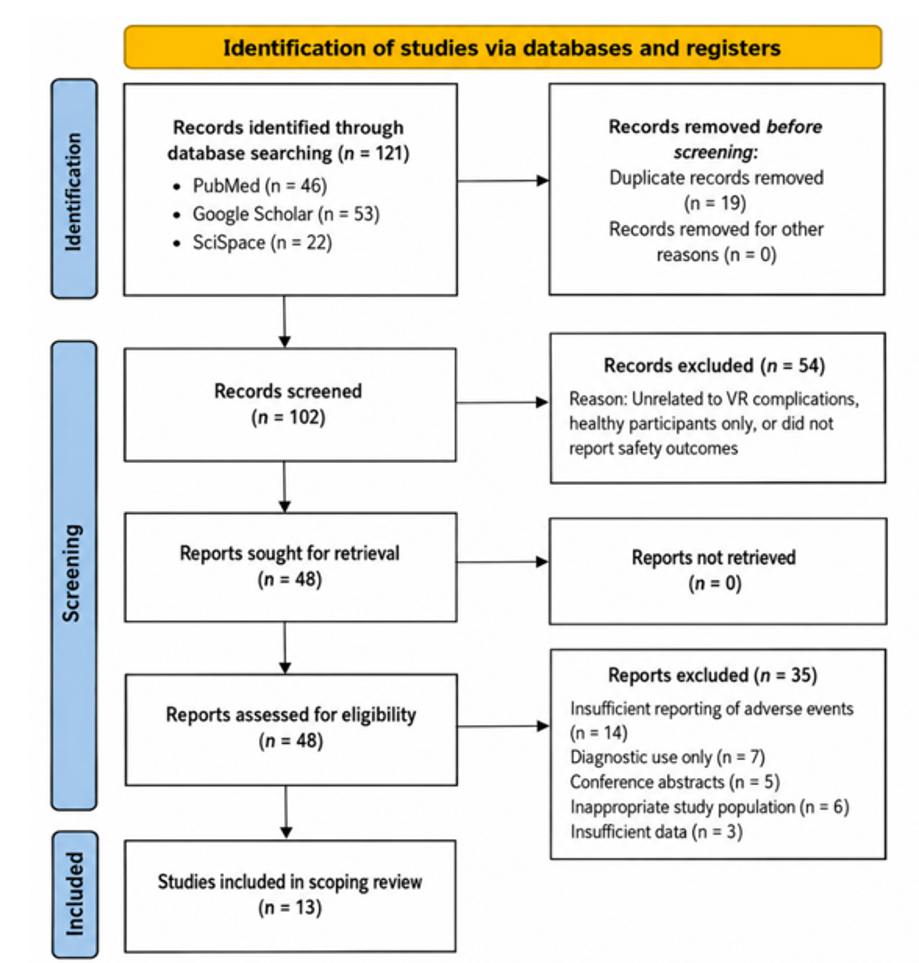
Fig. 1: PRISMA 2020 flow diagram
Reported Virtual Reality–Related Complications
Across all neurological disorders, cybersickness was the most frequently reported complication. Common symptoms included nausea, dizziness, headache, blurred vision, eye strain, fatigue, disorientation, and transient balance impairment. Most adverse events were classified as mild to moderate and resolved shortly after completion of the VR session. Serious adverse events were uncommon; however, specific neurological disorders demonstrated unique safety concerns. Parkinson's disease studies reported falls and visual hallucinations, whereas multiple sclerosis studies frequently documented fatigue and increased postural sway. Patients with traumatic brain injury experienced greater oculomotor symptoms and disorientation than other neurological populations.
Disorder-Specific Findings
Multiple Sclerosis: Two studies investigated VR safety in individuals with multiple sclerosis. Pau, et al. (2024) demonstrated that immersive VR exposure frequently resulted in blurred vision, nausea, dizziness, headache, and increased postural sway, indicating greater susceptibility to cybersickness. Kalron, et al. (2022) reported that customized VR rehabilitation was feasible and well accepted; however, fatigue resulted in treatment discontinuation in a small proportion of participants. Overall, VR was considered safe when session duration and fatigue were carefully monitored[2].
Parkinson's Disease: Four studies evaluated VR in Parkinson's disease. Pimenta Silva, et al. (2024) reported adverse events during approximately 8.4% of VR sessions, including discomfort, motor fluctuations, and five falls associated with immersive VR. Albani, et al. identified visual hallucinations in susceptible patients exposed to immersive environments[3]. Conversely, Kim, et al. (2017) demonstrated that immersive walking was generally well tolerated, with no significant increase in simulator sickness scores when appropriate supervision was provided[6]. Comparative research by do Carmo, et al. (2025) suggested that immersive VR improved cognition and anxiety but required careful patient selection[4].
Stroke: Two studies investigated VR rehabilitation following stroke. Banikova, et al. (2025) found high patient satisfaction, with most participants reporting no significant discomfort during rehabilitation. Mild dizziness, headache, and fatigue were occasionally observed, particularly after prolonged sessions[8]. A systematic review by Li, et al. (2023) concluded that although immersive VR may induce transient cybersickness, the overall incidence of severe adverse events in stroke rehabilitation remains low[9].
Traumatic and Acquired Brain Injury: Evidence regarding traumatic and acquired brain injury suggested greater susceptibility to cybersickness than other neurological populations. Meta-analytic findings demonstrated relatively higher Simulator Sickness Questionnaire (SSQ) scores, with dizziness, oculomotor symptoms, and disorientation being the predominant complaints. Despite these adverse effects, VR rehabilitation remained feasible when gradual exposure and continuous monitoring were implemented[9].
Spinal Cord Injury and Cerebral Palsy: The systematic review examining spinal cord injury and cerebral palsy reported that VR effectively improved motor function and upper-limb rehabilitation. Reported adverse effects were generally mild and included dizziness, eye strain, and transient muscle fatigue. However, many studies failed to comprehensively report safety outcomes, limiting conclusions regarding the true incidence of complications[9].
Hereditary Ataxia: The systematic review by Piñar-Lara, et al. (2026) demonstrated that VR significantly improved balance and motor function in hereditary ataxia. Nevertheless, several participants experienced dizziness, nausea, and reduced tolerance to immersive environments, resulting in treatment discontinuation. These findings highlight the importance of individualized progression and therapist supervision[11].
Dementia: The scoping review by Hirt and Beer (2020) reported that immersive VR was generally acceptable among individuals with dementia and cognitive impairment. Temporary confusion, dizziness, and visual discomfort were occasionally reported; however, most participants enjoyed the VR experience and completed the intervention successfully[12].
Epilepsy: Only one study investigated VR use in epilepsy. The principal concern was the possibility of photosensitive seizure provocation associated with immersive visual stimuli. The authors emphasized careful participant screening, individualized treatment protocols, and avoidance of flashing visual effects to minimize seizure risk during VR exposure[13].
Assessment of Virtual Reality Complications
The Simulator Sickness Questionnaire (SSQ) was the most frequently used instrument for evaluating cybersickness, followed by the Virtual Reality Sickness Questionnaire (VRSQ). Several studies incorporated objective physiological measures, including heart rate, galvanic skin response (GSR), electroencephalography (EEG), and postural stability assessments using force platforms. These measures enabled both subjective and objective evaluation of VR-related adverse effects and supported clinical decision-making regarding treatment continuation or modification[1, 3].
Strategies Used to Minimize Complications
Most studies implemented one or more strategies to reduce VR-related adverse events. Common approaches
included limiting VR exposure to 15–25 minutes, gradual progression of session intensity, therapist supervision, seated training for high-risk individuals, scheduled rest breaks, and optimization of hardware to reduce display latency and improve frame rate. Pre- and post-session monitoring using standardized questionnaires such as the SSQ was recommended for early identification of cybersickness symptoms. These measures improved patient safety and enhanced the overall feasibility of VR-based neurorehabilitation.
Summary of Results
This scoping review demonstrates that VR is generally a safe and feasible rehabilitation modality for individuals with neurological disorders. Although cybersickness remains the most commonly reported adverse event, most complications are mild, transient, and manageable with appropriate clinical precautions. Disorder-specific complications, including fatigue in multiple sclerosis, falls and visual hallucinations in Parkinson's disease, balance impairment after stroke, and photosensitive seizure risk in epilepsy, emphasize the need for individualized rehabilitation protocols. Overall, the evidence suggests that the therapeutic benefits of VR outweigh its risks when interventions are carefully supervised, exposure duration is controlled, and standardized safety assessments are routinely implemented.
| Study (Author, Year) | Study Design | Sample | Main Strengths | Potential Risk of Bias | Overall Quality |
|---|---|---|---|---|---|
| Pau, et al., 2024[1] | Cross-sectional experimental study | MS patients | Objective assessment of cybersickness and postural control | Small sample size; single-session exposure | Moderate |
| Kalron, et al., 2022[2] | Feasibility study | MS patients | Well-designed VR intervention with safety monitoring | Single-centre study; no control group | Moderate |
| Pimenta Silva, et al., 2024[3] | Prospective observational study | PD patients | Large number of VR sessions; systematic adverse-event reporting | Lack of randomization | High |
| do Carmo, et al., 2025[4] | Comparative clinical study | PD patients | Direct comparison of immersive and non-immersive VR | Small sample size | Moderate |
| Albani, et al.[5] | Clinical observational study | PD patients | First report of VR-induced hallucinations | Case-based observations; limited generalizability | Low–Moderate |
| Kim, et al., 2017[6] | Controlled experimental study | Older adults & PD | Standardized SSQ assessment and safety monitoring | Short intervention duration | High |
| Li, et al., 2025[7] | Systematic review | Multiple neurological populations | Comprehensive review of personalized VR interaction | No primary clinical data | High |
| Banikova, et al., 2025[8] | Pilot study | Stroke patients | Patient satisfaction and tolerability evaluated | Small sample size | Moderate |
| Li, et al., 2023[9] | Systematic review and meta-analysis | Multiple neurological disorders | High-level evidence synthesizing cybersickness | Heterogeneity among included studies | High |
| De Miguel-Rubio, et al., 2023[10] | Systematic review and meta-analysis | Upper-limb neurological rehabilitation | Comprehensive synthesis of rehabilitation outcomes | Limited reporting of adverse events | High |
| Piñar-Lara, et al., 2026[11] | Systematic review with meta-analysis | Hereditary ataxia | Evidence synthesis using standardized methodology | Limited number of primary studies | High |
| Hirt & Beer, 2020[12] | Scoping review | Dementia | Broad evaluation of VR implementation | No quantitative synthesis | Moderate |
| Tchao, et al., 2023[13] | Mixed-method clinical study | Epilepsy | Novel safety framework for VR exposure | Early-phase study; small sample | Moderate |
Table 1: Risk of bias and quality assessment of included studies
| Study (Author, Year) | Neurological Condition | Type of VR | Reported Complications | Assessment Tool | Key Findings | Clinical Implication |
|---|---|---|---|---|---|---|
| Pau, et al., 2024[1] | Multiple sclerosis | Immersive VR | Blurred vision, nausea, dizziness, headache, postural instability | SSQ, Postural sway | High susceptibility to cybersickness | Shorter sessions and monitoring required |
| Kalron, et al., 2022[1] | Multiple sclerosis | Immersive VR | Fatigue, mild dizziness | Feasibility assessment | VR feasible with good adherence | Monitor fatigue and adjust session duration |
| Pimenta Silva, et al., 2024[3] | Parkinson's disease | Immersive VR | Falls, discomfort, motor fluctuations | Adverse event recording | 8.4% of sessions reported adverse events | Continuous therapist supervision recommended |
| do Carmo, et al., 2025[4] | Parkinson's disease | Immersive & Non-immersive VR | Mild dizziness, visual discomfort | Anxiety and cognition scales | Immersive VR improved cognition with acceptable safety | Appropriate patient selection required |
| Albani, et al.[5] | Parkinson's disease | Immersive VR | Visual hallucinations | Clinical observation | Hallucinations occurred in predisposed patients | Screen patients before VR exposure |
| Kim, et al., 2017[6] | Parkinson's disease | Immersive VR | Mild simulator sickness | SSQ | No significant increase in SSQ scores | Immersive walking is generally safe |
| Banikova, et al., 2025[7] | Stroke | Immersive VR | Mild dizziness, headache | Patient satisfaction questionnaire | High patient tolerance | Suitable for supervised stroke rehabilitation |
| Li, et al., 2023[8] | Multiple neurological disorders | Immersive VR | Cybersickness, nausea, dizziness, oculomotor symptoms | Meta-analysis of SSQ studies | Brain injury patients had highest SSQ scores | Standardized safety assessment recommended |
| De Miguel-Rubio, et al., 2023[9] | SCI & Cerebral palsy | Immersive/Non-immersive VR | Eye strain, dizziness, muscle fatigue | Review of clinical trials | Most adverse events were mild | Better adverse-event reporting needed |
| Piñar-Lara, et al., 2026[10] | Hereditary ataxia | Immersive VR | Dizziness, nausea, treatment discontinuation | Clinical outcome measures | Reduced tolerance to prolonged VR | Individualized progression recommended |
| Hirt & Beer, 2020[11] | Dementia | Immersive VR | Temporary confusion, dizziness | Qualitative assessment | Generally well accepted by older adults | Simplified VR environments recommended |
| Tchao, et al., 2023[12] | Epilepsy | Immersive VR | Photosensitive seizure risk | Clinical safety protocol | Screening is essential before VR therapy | Avoid flashing visual stimuli |
| Li, et al., 2025[13] | Multiple neurological disorders | Adaptive VR | Reduced cybersickness through personalization | Systematic review | Personalized VR improves safety and usability | AI-assisted adaptive VR should be explored |
Table 2: Summary of Virtual Reality Complications Across Neurological Conditions
DISCUSSION
The present scoping review synthesized evidence published between 2016 and 2026 regarding the complications associated with virtual reality (VR) interventions in individuals with neurological disorders. Although VR has become an increasingly valuable tool in neurorehabilitation because of its ability to promote neuroplasticity, task-specific training, and patient engagement, the findings indicate that VR is not entirely free of adverse effects. Across the included studies, cybersickness emerged as the most frequently reported complication, with symptoms including nausea, dizziness, headache, blurred vision, eye strain, disorientation, and fatigue. These findings are consistent with previous systematic reviews, which concluded that immersive VR induces greater sensory conflict than non-immersive systems and therefore presents a higher risk of simulator sickness[9].
One of the most important observations from this review is that the type and severity of VR-related complications differ according to the underlying neurological disorder. Individuals with multiple sclerosis (MS) consistently demonstrated greater susceptibility to cybersickness because of pre-existing impairments in sensory integration, balance, and visual function. Pau, et al. reported significant increases in blurred vision, dizziness, nausea, headache, and postural instability following immersive VR exposure, while Kalron, et al. identified fatigue as an important reason for treatment discontinuation in a proportion of participants[1, 2]. These findings suggest that clinicians should individualize session duration and monitor fatigue closely when implementing VR rehabilitation for patients with MS.
Patients with Parkinson's disease (PD) exhibited unique VR-related complications that were not commonly observed in other neurological disorders. Besides mild cybersickness symptoms, immersive VR was associated with falls, motor fluctuations, and visual hallucinations in susceptible individuals. Silva, et al. reported adverse events in approximately 8.4% of immersive VR sessions,
including five falls directly related to VR exposure[3]. Similarly, Albani, et al. described VR-induced visual hallucinations in patients with advanced PD, suggesting that immersive environments may interact with underlying neurodegenerative changes affecting visual perception[5]. Conversely, Kim, et al. demonstrated that carefully supervised immersive walking programs produced no significant increase in simulator sickness scores, highlighting that appropriate patient selection and therapist supervision substantially improve safety[6].
Among stroke survivors, VR was generally well tolerated, with high levels of patient satisfaction and relatively few serious adverse events. Banikova, et al. found that most participants completed rehabilitation without discomfort, although mild dizziness and headache occasionally occurred after prolonged sessions[8]. Likewise, Li, et al.'s systematic review concluded that while transient cybersickness may occur, immersive VR remains a safe rehabilitation modality when treatment intensity and exposure duration are appropriately controlled[9]. These findings support the continued use of VR as an adjunct to conventional stroke rehabilitation, particularly for improving upper-limb function, gait, balance, and activities of daily living.
The review also demonstrated that patients with traumatic brain injury (TBI) and acquired brain injury (ABI) may experience greater oculomotor symptoms and disorientation than other neurological populations. Cognitive impairment and vestibular dysfunction likely increase sensitivity to visual-vestibular conflicts generated during immersive VR exposure. Although severe adverse events were uncommon, higher Simulator Sickness Questionnaire (SSQ) scores reported in this population emphasize the importance of gradual exposure, individualized treatment progression, and continuous clinical monitoring[9].
Evidence regarding spinal cord injury (SCI), cerebral palsy (CP), hereditary ataxia, dementia, and epilepsy remains relatively limited but suggests that VR is generally feasible when appropriate precautions are implemented. Mild dizziness, eye strain, and fatigue were the most frequently reported adverse effects in SCI and CP[10]. Patients with hereditary ataxia demonstrated reduced tolerance to prolonged VR exposure because of dizziness and nausea, resulting in treatment discontinuation in some cases[11]. Older adults with dementia generally accepted immersive VR despite temporary confusion or visual discomfort, whereas epilepsy remains a unique clinical situation because flashing visual stimuli may precipitate photosensitive seizures in susceptible individuals[12, 13]. These findings highlight the necessity for disorder-specific safety protocols rather than adopting a uniform approach for all neurological conditions.
Another important finding of this review is the lack of standardized reporting of adverse events across VR rehabilitation studies. Considerable heterogeneity was observed in the methods used to assess cybersickness, treatment tolerability, and safety outcomes. Although the Simulator Sickness Questionnaire (SSQ) remains the most commonly used instrument, several studies relied solely on subjective patient reports without objective physiological monitoring. Only a limited number of investigations incorporated measures such as galvanic skin response, heart rate, electroencephalography, or postural sway analysis to quantify VR-related physiological changes[1, 9]. Greater standardization of adverse-event reporting would improve comparisons across studies and facilitate the development of evidence-based clinical guidelines.
The review further identified several strategies that consistently reduced the occurrence of VR-related complications. Most authors recommended limiting immersive VR sessions to 15–25 minutes, providing regular rest intervals, gradually increasing treatment intensity, ensuring therapist supervision, and utilizing high-performance hardware with minimal display latency[1, 3, 6, 9]. Personalized VR systems capable of adapting task difficulty and environmental complexity according to patient performance have also emerged as promising approaches for improving both rehabilitation outcomes and patient safety[7]. These adaptive systems may reduce cognitive overload and minimize sensory conflicts responsible for cybersickness.
Despite the growing body of evidence supporting VR in neurorehabilitation, several research gaps remain. Most available studies investigated only the immediate or short-term effects of VR exposure, while evidence regarding repeated or long-term use remains scarce. Sample sizes were generally small, many studies employed pilot or feasibility designs, and adverse-event reporting was inconsistent. Furthermore, relatively few studies directly compared immersive and non-immersive VR systems or evaluated the effectiveness of specific mitigation strategies. As VR technology continues to expand into home-based telerehabilitation, future research should prioritize the development of standardized safety protocols, remote monitoring systems, and large multicenter clinical trials evaluating long-term safety outcomes[7, 9].
Overall, the findings of this scoping review indicate that the therapeutic advantages of VR in neurological rehabilitation generally outweigh its risks when interventions are delivered within carefully designed clinical protocols. Although cybersickness remains the predominant complication, most adverse events are mild, transient, and manageable through appropriate patient selection, individualized treatment progression, standardized monitoring, and therapist supervision. The development of evidence-based, disorder-specific safety guidelines will be essential to ensure the safe integration of immersive VR into routine neurorehabilitation practice.
FUTURE DIRECTIONS
Future research should focus on strengthening the evidence regarding the safety and effectiveness of virtual reality (VR) in neurological rehabilitation. Most existing studies have evaluated only short-term outcomes; therefore, large multicenter longitudinal studies are needed to investigate the long-term effects of repeated VR exposure. Standardized reporting of adverse events using validated tools such as the Simulator Sickness Questionnaire (SSQ) and Virtual Reality Sickness Questionnaire (VRSQ) should be adopted to improve comparability across studies. The development of disorder-specific safety guidelines for conditions such as multiple sclerosis, Parkinson's disease, stroke, and epilepsy is essential to optimize patient care. Advances in artificial intelligence and adaptive VR systems may facilitate personalized rehabilitation while reducing cybersickness. Furthermore, future studies should evaluate the safety of home-based VR telerehabilitation, optimize hardware and software to minimize sensory conflict, and investigate the cost-effectiveness of VR interventions. Addressing these gaps will support the safe, standardized, and widespread integration of VR into routine neurorehabilitation practice.
CONCLUSION
Virtual reality (VR) is an effective and innovative tool for neurorehabilitation, offering significant benefits in improving motor function, balance, gait, cognition, and patient engagement across various neurological disorders. However, this scoping review highlights that VR is associated with complications, particularly cybersickness, including dizziness, nausea, headache, blurred vision, and fatigue, with disorder-specific risks such as falls in Parkinson's disease, postural instability in multiple sclerosis, and seizure concerns in epilepsy. Despite these adverse effects, most complications are mild, transient, and manageable through appropriate patient selection, therapist supervision, limited session duration, and standardized safety monitoring. Current evidence supports the safe integration of VR into neurological rehabilitation when evidence-based protocols are followed. Future research should emphasize long-term safety, standardized adverse-event reporting, and the development of disorder-specific guidelines to maximize the therapeutic benefits of VR while minimizing potential risks.
DISCLOSURE
Competing Interests: Authors have declared that no competing interests exist.
Funding: Nil.
References
1. Pau M, Arippa F, Leban B, Porta M, Casu G, Frau J, et al. Cybersickness in People with Multiple Sclerosis Exposed to Immersive Virtual Reality. Bioengineering. 2024; 11 (2). Available from: https://doi.org/10.3390/bioengineering11020115
2. Kalron A, Frid L, Fonkatz I, Menascu S, Dolev M, Magalashvili D, et al. The design, development, and testing of a virtual reality device for upper limb training in people with multiple sclerosis: single-center feasibility study. JMIR Serious Games. 2022; 10 (3). Available from: https://doi.org/10.2196/36288
3. Pimenta Silva D, Pona-Ferreira F, Santos B, Campo-Prieto P, Bouça-Machado R, Ferreira JJ. Safety of Immersive Virtual Reality for the Management of Parkinson’s Disease. Sensors. 2024; 24 (24). Available from: https://doi.org/10.3390/s24248188
4. do Carmo AA, da Silva SS, Lara JP, de Assis GG, Garcia PA, dos Santos Mendes FA. Effects of immersive and non- immersive virtual reality on anxiety and cognition in Parkinson's disease: A comparative study. Journal of Bodywork and Movement Therapies. 2025; 42 Available from: https://doi.org/10.1016/j.jbmt.2024.11.019
5. Albani G, Pedroli E, Cipresso P, Bulla D, Cimolin V, Thomas A, et al. Visual Hallucinations as Incidental Negative Effects of Virtual Reality on Parkinson's Disease Patients: A Link with Neurodegeneration?. Parkinson's Disease. 2015; 2015 Available from: https://doi.org/10.1155/2015/194629
6. Kim A, Darakjian N, Finley JM. Walking in fully immersive virtual environments: an evaluation of potential adverse effects in older adults and individuals with Parkinson’s disease. Journal of NeuroEngineering and Rehabilitation. 2017; 14 (1). Available from: https://doi.org/10.1186/s12984-017-0225-2
7. Li T, Zhu Y, Liang HN, Wang Y. Adapting to the User: A Systematic Review of Personalized Interaction in VR. arXiv preprint. 2025; Available from: https://arxiv.org/html/2510.13123v1
8. Banikova S, Najsrova A, Szegedi I, Vitova K, Fiedorova I, Trda J, et al. Patient satisfaction and tolerance of virtual reality rehabilitation in subacute ischemic stroke: a pilot study. Frontiers in Rehabilitation Sciences. 2025; 6 Available from: https://doi.org/10.3389/fresc.2025.1660766
9. Li X, Luh DB, Xu RH, An Y. Considering the Consequences of Cybersickness in Immersive Virtual Reality Rehabilitation: A Systematic Review and Meta-Analysis. Applied Sciences. 2023; 13 (8). Available from: https://doi.org/10.3390/app13085159
10. De Miguel-Rubio A, Alba-Rueda A, Millan-Salguero EM, De Miguel-Rubio MD, Moral-Munoz JA, Lucena-Anton D. Virtual Reality for Upper Limb Rehabilitation in Patients With Obstetric Brachial Palsy: Systematic Review and Meta-Analysis of Randomized Controlled Trials (Preprint). Journal of Medical Internet Research. 2023; 25 Available from: https://doi.org/10.2196/preprints.47391
11. Piñar-Lara M, González-Carmona A, Obrero-Gaitán E, Cortés-Perez I. The Effectiveness of Virtual Reality-Based Interventions in Patients with Ataxic Conditions: A Systematic Review with Meta-Analysis. Sensors. 2026; 26 (7). Available from: https://doi.org/10.3390/s26072069
12. Hirt J, Beer T. Use and impact of virtual reality simulation in dementia care education: A scoping review. Nurse Education Today. 2020; 84 Available from: https://doi.org/10.1016/j.nedt.2019.104207
13. Tchao D, Lewis-Fung S, Gray H, Pardini S, Harris LR, Appel L. Describing epilepsy-related anxiety to inform the design of a virtual reality exposure therapy: Results from Phase 1 of the AnxEpiVR clinical trial. Epilepsy & Behavior Reports. 2023; 21 Available from: https://doi.org/10.1016/j.ebr.2023.100588
Copyright
© 2026 Published by Laxmi Memorial Education Trust. This is an open-access article under CC BY 4.0 license. (https://creativecommons.org/licenses/by/4.0/)
Cite this article
Ismail Hazim, K B Riyas Basheer, P G Krishnendu, K R Athul Krishna, Subhashchandra Rai, V A Femina Hameed, Nishka S Bolar, Mohammed Sanabin. Virtual Reality Rehabilitation-Related Complications in Neurological Disorders: A Scoping Review. AJ J Med Sci 2026;3(3):74-86.