Volume: 3 Issue: 3
A Descriptive Study to Assess the Attitude of School Teachers Regarding Imparting of Sex Education to School Children in Selected Schools at Mangalore
Year: 2026, Page: 126-133, Doi: https://doi.org/10.71325/ajjms.v3i3.26.4
Received: Jan. 9, 2026 Accepted: Sept. 17, 2026 Published: Oct. 10, 2026
Abstract
Background: Puberty brings out dramatic physical and mental change to an unprepared child. Sex education should be mandatory in school. Sex Education or sexual education is all about educating people about sex, its related problems, and how to get over them. The goal is to promote safe and hygienic sex. It is the procedure of gaining knowledge and developing mind-set as well as ideas about puberty, menstruation, good and bad touch, sex, sexual identity, human relations, closeness, gender roles, teenage pregnancies, contraception methods, spacing methods, prevention. Teachers should take the initiative to teach the students about sex education from young age and continue the education as the child grows. Objectives of the study: 1) To assess the attitude of school teachers regarding imparting of sex education to school children. 2) To find out the association between attitude score and related demographic variables. Materials/Methods: A descriptive survey approach with descriptive explorative design determined the attitude of school teachers regarding imparting of sex education in school children. Nonprobability convenience, Sampling technique was used to select the 30 samples for the study. Data was collected by using demographic proforma and Likert 5 point attitude scale from school teachers of selected schools at Mangalore. Results: Highest percentage (50%) of sample where in the age group 31 – 40 years and above and the lowest percentage of them (6.67%) were in the age group of 41 to 50 years. The highest percentage of the samples (96.67%) were females and lowest percentage of the samples (3.33%) were males. The highest percentage of samples (76.67%) have completed their B.Ed. and lowest percentage of the samples (3.33%) were other subjects and TTC and graduate with M.Ed. The highest percentage of samples (63.33%) have > 5 years of teaching experience and 22.33% have < 3 years of teaching experience. The highest percentage (36.67%) were dealing with two subjects and lowest percentages (6.67%) dealing with Mathematics. The highest percentage (70%) of the samples were married and lowest percentage (30%) were single. The highest percentage (46.67%) of the sample have 2 children and lowest percentage (3.33%) have >2 children. 20% of the school teachers had favourable attitude and 80% have highly favourable attitude regarding imparting of sex education to school children. Conclusion: There was a significant association between pre-test attitude score and selected demographic variables such as gender, educational status, year of teaching experience, dealing subject, marital status and there was no significant association between pre-test attitude score and demographic variables such as age and number of children.
Keywords: Sex education, Attitude, School children
INTRODUCTION
Sex education is defined as a broad program that aims to build a strong foundation for lifelong sexual health by acquiring information and attitudes, beliefs and values about one's identity, relationships and intimacy. According to WHO Sexual health is a state of physical, emotional, mental, and social well-being in relation to sexuality and not merely the absence of disease or infirmity[1]. Sex education is the instruction of issues relating to human sexuality, including emotional relations and responsibilities, human sexual anatomy, sexual activity, sexual reproduction, age of consent, reproductive health, reproductive rights, safe sex, birth control and sexual abstinence[2].
There are so many misunderstandings about sex education in society. Many people think that such type of education will increase interest of youth in sexuality. But in-fact sex education is the training of balance behaviour, healthy lifestyle and gender equality. HIV- AIDS are spreading rapidly in Indian youngsters. The main cause of HIV- AIDS infection is lack of knowledge about sexuality. Sex education in schools can overcome on this issue if teachers take positive attitude about sex education[5].
According to the WHO, sex education should be imparted on the children who are 12 years and above[2]. On September 25th, 2018, under Ayushman Bharat, it was emphasized that teachers, health workers, parents and communities are jointly engaged to improve the overall situation of health and well-being of the students[3]. It is widely accepted that children have a right to sex education, because it partly helps to protect themselves against sexual abuse[4].
In India, sex education has long been an argument issue. While some people understand the need of teaching sex education to kids at a young age, others do not believe it is necessary to teach or even discuss sex with their children and that it would tarnish the minds of their kids. In India we do not talk about sexual harassment or abuse of any kind because it is too controversial, unethical and still considered taboo. Teachers need to ensure that the right information is given to their students[7].
Moreover, because of teenage pregnancy or sexually transmitted diseases, students may drop out of school. Hence, to prevent dropouts and to improve the performance of the students, sex education thought to be integrated into the school curriculum. Also, in many cultures, sex education is considered taboo, therefore young children are not aware of puberty and the bodily changes associated with it[8].
Schools can play a significant role in imparting knowledge regarding sex, sexuality, and sexual wellness to students. This can help students to be mindful and keep themselves away from dangers and to maintain their mental health as well. This aids in building an inclusive environment in schools and foster a positive culture in school. Age-appropriate comprehensive sex education would enable students to be responsible and take care of themselves in terms of physical and mental health[9]. The right kind of sex education services for boys and girls separately from the teacher of a same gender. It is the responsibility of parents, teachers and social worker to provide adequate information about sex and its impact[9].
Need for the study:
Puberty brings out dramatic physical and mental change to an unprepared child. Sex education should be mandatory in school. Every child should know that they can decide who can touch them. Parents should not be allowed to opt-in or opt-out of something they are going to need in their life[5].
By imparting sex education among the adolescents by teachers which can mitigate issues like health problems, sexual and gender-based violence, substance abuse, and sexually transmitted diseases among others. Sex education is also important to empower young people to make informed decisions about their bodies and maintain healthy relationships in their lives[10].
Sex education or sexual education is all about educating people about sex, its related problems, and how to get over them. It is the procedure of gaining knowledge and developing mind-set as well as ideas about puberty, menstruation, good and bad touch, sex, sexual identity, human relations, closeness, gender roles, teenage pregnancies, contraception methods, spacing methods, prevention of HIV/AIDS/STD and sexual violence prevention while children reach teenage level. Lack of sex education may lead the way to their unusual behaviour. If not corrected at the exact time, it may generate problems of immature misbehaviours in these children's life[1].
In India 50% of the population is less than 25 years of age being youth. According to United Nations reports, India has the third highest number of HIV cases in the world and adolescents in the age group of 15 – 25 years, contribute to 31% of the total. Moreover, India has the highest rate of teen pregnancy. Even so, our healthcare systems are overlooking the reproductive health of adolescents.
School-based sex education can be an important and effective way of enhancing children’s knowledge, attitudes and behaviour through school teachers. There is widespread agreement that formal education should include sex education[6].
Sex is a very sensitive subject that is still considered a taboo in Indian society and a topic not to be discussed openly. Thus, before formally introducing the topic of sex education, it is extremely important to know attitude of the teacher regarding sex education to avoid any adverse effects. Sex education requires the will and motivation of the teachers and school boards as the key players in this change. Sex education requires a positive and proactive attitude of the education professionals[7]. Therefore, this study aimed at determining the attitude of teachers towards sex education. Hence, we decided to conduct research study to assess the attitude of school teachers regarding imparting of sex education to school children in selected schools at Mangalore as a part of our research curriculum.
Objectives of the study:
The objectives of the study are:
-
To assess the attitude of school teachers regarding imparting of sex education to school children.
-
To find out the association between attitude score and selected demographic variables.
Hypothesis:
-
H1: There will be significant association between Attitude score and selected demographic variables.
METHODOLOGY
Research Approach:
A descriptive survey approach was adopted to determine the attitude of school teachers regarding imparting of sex education to school children in selected schools at Mangalore.
Research design:
In this Study Descriptive Explorative research design was used [Table. 1].
| Group | Day 1 |
|---|---|
| Screening score (01) | |
| School Teachers from selected schools at Mangalore | Assess the attitude of school teachers regarding imparting of sex education to school children |
Table 1: Schematic representation of study design
Variables:
Dependent Variables: In this study dependent variable was attitude of school teachers regarding imparting of sex education to school children
Demographic Variables: In this study, demographic variables were age, gender, educational qualification, number of years of teaching experience, dealing subjects, marital status & number of children.
Study Setting:
This study was conducted in various selected schools at Mangalore.
Population:
In this study the population consists of school teachers of selected schools at Mangalore.
Sample:
In this study, the sample consists of 30 school teachers from selected schools at Mangalore.
Sample Technique:
Non-probability convenience sampling technique was used.
Criteria for selection of Sample:
Inclusion Criteria: The study includes the school teachers who are:
-
working in the selected schools at Mangalore
-
willing to participate in this study
-
able to read and write in English
Exclusion Criteria: The study excludes the school teachers who:
-
are not available at the time of data collection.
Description of the final tool:
The present study was planned primarily to determine the attitude of school teachers regarding imparting of sex education in school children. Hence the data collection tool consists of a demographic proforma and Likert 5-point attitude scale. Content validity of the tool was evaluated by giving it to 5 experts.
Section A: Demographic proforma consists of 7 items such as Age, Gender, educational qualification, number of years of teaching experience, dealing subjects, marital status and number of children.
Section B: Likert 5-point attitude scale was used to check the attitude of school teachers regarding imparting of sex education in children, and this include 20 items. Each statement had 5 options, and the respondent has to rate his/her opinion on scale between strongly agree to strongly disagree. The scale includes both Positive (9) and Negative (11) statements. The coding done for a positive statement from strongly agree to strongly disagree is 5 - 1 and negative statements it is 1 – 5. The maximum possible score was 100, and the minimum score was 20.
The score was categorised on basis as follows [Table. 2]:
| Attitude | Scores | Percentage |
|---|---|---|
| Unfavourable | 1 – 25 | 0-25% |
| Moderately Favourable | 26 – 50 | 26–50% |
| Favourable | 51 – 75 | 50–75% |
| Highly Favourable | 76 – 100 | 75–100% |
Table 2: Arbitrarily Categorised attitude score
Data Collection method:
-
The permission was taken from the authorities concerned to select samples.
-
Informed consent was taken from the study subjects after explaining the purposes of the study and confidentiality of the information obtained was assured.
-
The data was collected on the planned days using Demographic proforma and Likert 5-point Attitude Scale.
-
The collected data was compiled for statistical analysis.
Plan for data analysis:
The data was analyzed by using descriptive and inferential statistics
-
The data was organized in a master sheet.
-
Baseline proforma was analyzed by frequency and percentage by computing mean, mean percentage, median and standard deviation.
-
Association of the attitude score and selected demographic variables were calculated by Chi-Square test.
RESULTS
Organization of the study findings
The analysis of the data from the study are presented under the following headings:
Section A: Description demographic variables.
Section B: Description of attitude score of primary school teachers regarding imparting of sex education to school children.
Section C: Association of attitude score of primary school teachers with demographical variables
Section A: Description of demographic variables
| Sl. no. | Demographic Variable | Frequency (f) | Percentage (%) |
|---|---|---|---|
| 1. | Age (in year) | ||
| a) | 21 – 30 | 8 | 26.66 |
| b) | 31 – 40 | 15 | 50 |
| c) | 41 – 50 | 5 | 16.66 |
| d) | Above 51 | 2 | 6.66 |
| 2. | Gender | ||
| a) | Male | 1 | 3.33 |
| b) | Female | 29 | 96.66 |
| 3. | Educational status | ||
| a) | TTC | 1 | 3.33 |
| b) | Graduate with B. Ed | 23 | 76.66 |
| c) | Graduate with M. Ed | 1 | 3.33 |
| d) | Any other | 5 | 16.66 |
| 4. | Year of teaching experience | ||
| a) | < 3 years | 7 | 23.33 |
| b) | 3 – 5 years | 4 | 13.33 |
| c) | >5 years | 19 | 63.33 |
| 5. | Dealing subject | ||
| a) | Language subject | 6 | 20 |
| b) | Mathematics | 2 | 6.66 |
| c) | Social science | 3 | 10 |
| d) | Science | 4 | 13.33 |
| e) | Any other | 4 | 13.33 |
| f) | Combined Subjects | 11 | 36.66 |
| 6. | Marital status | ||
| a) | Single | 9 | 30 |
| b) | Married | 21 | 70 |
| c) | Divorced | 0 | 0 |
| d) | Separated | 0 | 0 |
| 7. | Number of children | ||
| a) | Nil | 11 | 36.66 |
| b) | 1 | 4 | 13.33 |
| c) | 2 | 14 | 46.66 |
| d) | >2 | 1 | 3.33 |
Table 3: Frequency and percentage distribution of sample according to demographic Variables (n=30)
The data presented in the [Table. 3] reveals the following findings.
-
Highest percentage (50%) of sample where in the age group 31 – 40 years and above and the lowest percentage (6.67%) was in the age group above 51 years.
-
The highest percentage of the samples (96.67%) were females, and the lowest percentage of the samples (3.33%) were males.
-
The highest percentage of samples (76.67%) have completed their B.Ed., and the lowest percentage of the samples (3.33%) were in other subjects and TTC and graduated with an M.Ed.
-
The highest percentage of samples (63.33%) have > 5 years of teaching experience, and 22.33% have <3 years of teaching experience.
-
The highest percentage (36.67%) of the samples deal with two subjects, and the lowest percentage (6.67%) of the samples deal with Mathematics.
-
The highest percentage (70%) of the samples were married, and lowest percentage was 30% of the sample were single.
-
The highest percentage (46.67%) of the sample have 2 children, and the lowest percentage (3.33%) have >2 number of children.
Section B: Description of attitude score of primary school teachers regarding the imparting of sex education to school children
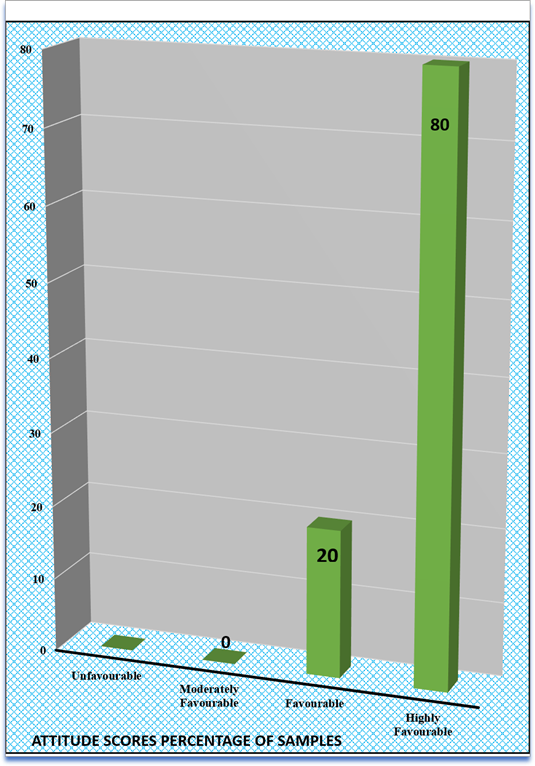
Fig. 1: 3-D Stacked Column diagram showing attitude score
Data presented in [Fig. 1] revealed that 20% of the school teachers had a favourable attitude and 80% had a highly favourable attitude regarding the imparting of sex education to school children.
| Screening score (O1) |
Max. possible score |
Range | Mean | Median | Stand- ard devia- tion |
Mean perce- ntage |
|---|---|---|---|---|---|---|
| Attitude Score |
100 | 72-96 | 80.40 | 79 | 6.14 | 80.40 |
Table 4: Distribution of the subjects according to the pre-test mean percentage level of attitude score (n=30)
Data presented in the [Table. 4] revealed that the mean score was 80.40%, the median was 79%, and the standard deviation was 6.14%, with a mean percentage score of 80.40%, indicating the school teachers’ attitude towards imparting sex education to school children
Section C: Association of attitude score of primary school teachers with demographical variables
In order to find out the association between the pretest attitude score of school teachers and selected demographic variables such as a age, gender, education status, year of teaching experience, dealing subject, marital status, number of children, Chi-square test, chi- square test -yates correction and fishers exact test was computed.
The following null hypothesis was stated.
H1: There will be no significant association between attitude and selected demographic variables.
| Sl. No | Demographic Variables |
Attitude Score |
Chi square | |
|---|---|---|---|---|
| < median 79 | > median 79 | |||
| 1 | Age (in years) | |||
| a | 21 – 30 years | 2 | 6 | 7.9 |
| b | 31 – 40 years | 9 | 6 | |
| c | 41 – 50 years | 5 | 0 | |
| d | Above 51 | 1 | 1 | |
| 2 | Gender | |||
| a | Male | 1 | 0 | 0.566* |
| b | Female | 16 | 13 | |
| 3 | Educational status | |||
| a | TTC | 0 | 1 | 5.489* |
| b | Graduate with B.Ed | 15 | 8 | |
| c | Graduate with M.Ed | 1 | 0 | |
| d | Any other | 1 | 4 | |
| 4 | Year of teaching experience | |||
| a | < 3 years | 2 | 5 | 3.387* |
| b | 3 – 5 years | 2 | 2 | |
| c | >5 years | 13 | 6 | |
| 5 | Dealing subject | |||
| a | Language subject | 4 | 2 | 4.291* |
| b | Mathematics | 1 | 1 | |
| c | Social science | 3 | 0 | |
| d | Science | 2 | 2 | |
| e | Any other | 1 | 3 | |
| f | Two Subjects dealing | 6 | 5 | |
| 6 | Marital status | |||
| a | Single | 2 | 7 | 6.19* |
| b | Married | 15 | 6 | |
| c | Divorced | 0 | 0 | |
| d | Separated | 0 | 0 | |
| 7 | Number of children | |||
| a | Nil | 3 | 8 | 12.417 |
| b | 1 | 4 | 0 | |
| c | 2 | 9 | 5 | |
| d | >2 | 1 | 0 | |
Table 5: Association between the attitude score of the school teachers and selected demographic variables (n=30)
[Table value (x2(1) =3.84, x2(2) =5.99, x2(3) =7.82, x2(5) =11.07), p<0.05]
The data presented in [Table. 5] shows that there is a significant association between the attitude score and demographic variable such as gender, educational status, year of teaching experience, dealing subject, marital status (x2(2) =3.84, x2(3) =7.82, x2(4) =5.99, x2(5) =11.07, x2(6) =7.82) and no association between Age, Number of children (x2(1) =7.82, x2(7) =7.82).
DISCUSSION
Major findings of the study revealed that 20% of the school teachers had favourable attitude and 80% have highly favourable attitude regarding imparting of sex education to school children. There was a significant association between attitude score and selected demographic variables such as gender, educational status, year of teaching experience, dealing subject, marital status and there was no significant association between pre-test attitude score and demographic variables such as age and number of children.
A cross-sectional study was conducted by Joseph et al., in Mangalore, South India, to assess the experiences and perceptions of 236 secondary school teachers regarding reproductive health education. Data were collected using a self-administered questionnaire. findings of the study revealed that only 8.9% of teachers had received training in reproductive health education, while 75.8% identified cultural barriers as a major challenge. About 40.3% felt that sexuality education could promote premarital sexual activity. However, 60.8% expressed willingness to conduct reproductive health education if appropriate training was provided. The study recommended teacher training and improved availability of educational resources for effective implementation[11].
Findings of the study
It is widely accepted that children have a right to sex education, because it partly helps to protect themselves against sexual abuse. It is about developing young people's skills so that they can make informed about their behaviour and feel confident and competent about acting on these choices[12]. By imparting sex education among the adolescents by teachers which can mitigate issues like
health problems, sexual and gender-based violence, substance abuse, and sexually transmitted diseases among others. Sex education is also important to empower young people to make informed decisions about their bodies and maintain healthy relationships in their lives[10].
CONCLUSION
The assessment of attitude of school teachers regarding imparting of sex education to school children in selected schools in Mangalore was conducted successfully. The candidates were cooperative and willingly participated in the study.
LIMITATIONS
The limitations recognized in the study were:
-
The sample size was small; thus, it restricts the statistical inferences of results.
-
The study was limited to school teachers only.
-
Extraneous variables like exposure to mass media and health professionals were beyond the control of the researcher.
RECOMMENDATIONS
Based on the finding of the study, the following recommendation are made for the future research study:
-
A similar study can be conducted in large groups to generalize the study findings.
-
School health nurses and counsellors may collaborate with teachers in planning and implementing sex education programmes.
-
Experimental studies may be conducted to evaluate the effectiveness of structured educational programmes in improving teachers’ knowledge and attitude towards sex education.
DECLARATION
Conflict of Interest: None.
Funding: Nil.
References
1. Shajahan I, Ashika S, Sathyanarayana Rao TS, Kevan W. Adolescent sex education in India: Current perspectives. Indian Journal of Psychiatry. 2015; 57 (4). Available from: https://doi.org/10.4103/0019-5545.171843
2. Formby E. Sex and relationships education, sexual health, and lesbian, gay and bisexual sexual cultures: views from young people. Sex Education. 2011; 11 (3). Available from: https://doi.org/10.1080/14681811.2011.590078
3. Kumara A. Sex education and sexuality in India. 2022; Available from: https://publicpolicyindia.com
4. Sheriff DS. Sex Education is the need of the hour. Canadian Medical Association Journal. 2018; 190 (50). Available from: https://doi.org/10.1503/cmaj.180773
5. Shriyanshi C. Need for sex education in schools. 2020; Available from: https://blog.ipleaders.in
6. Special Issue – Organized by Department of Social Work, Bishop Heber College. Research on Humanities and Social Sciences. 2017; 7 Available from: WWW.iiste.org/
7. Qasim HS. A study of Attitude of Senior Secondary School Teachers towards Sex Education. Indo-Indian Journal of Social Science Researches. 2013; 9 (1). Available from: https://www.researchgate.net/publication/306286890_A_study_of_Attitude_of_Senior_Secondary_School_Teachers_towards_Sex_Education
8. Garg S, Pandya A, Ravindra HN. Effectiveness of Structured Teaching Programme on Knowledge Regarding Selected Common Behavioural Problems of Children. Asian Journal of Nursing Education and Research. 2017; 7 (2). Available from: https://doi.org/10.5958/2349-2996.2017.00040.4
9. World Health Organization. Regional Office for South-East Asia. Adolescence the critical phase : the challenges and the potential. 1997; Available from: https://iris.who.int/handle/10665/204749
10. Thakur R, Muttreja P. Why India needs to change its approach towards sexuality education. The Hindu. 2022; Available from: https://www.thehindu.com/education/why-india-needs-to-change-its-approach-towards-sexuality-education-riya-thakur-poonam-muttreja/article65503010.ece
11. Joseph N, Mahato V, Pandey A, Mishra S, Prakash G, Gandhi R. Experiences and perception towards reproductive health education among secondary school teachers in South India. Reproductive Health. 2021; 18 (1). Available from: https://doi.org/10.1186/s12978-021-01224-6
12. World Health Organization Regional Office for Europe. Standards for sexuality education in Europe: a framework for policy makers, educational and health authorities and specialists. Cologne: Federal Centre for Health Education. 2010; Available from: https://whocc.bioeg.de/fileadmin/user_upload/Dokumente/BIOEG_Standards_English.pdf
Copyright
© 2026 Published by Laxmi Memorial Education Trust. This is an open-access article under CC BY 4.0 license. (https://creativecommons.org/licenses/by/4.0/)
Cite this article
Rajesh Shetty, Nikku Achamma Thomas. A Descriptive Study to Assess the Attitude of School Teachers Regarding Imparting of Sex Education to School Children in Selected Schools at Mangalore. AJ J Med Sci 2026;3(3):126-133