Volume: 3 Issue: 1
Pattern of Drug Usage Among Cases Brought for Drug Screening to a Tertiary Care Hospital – A Retrospective Study
Year: 2026, Page: 12-16, Doi: https://doi.org/10.71325/ajjms.v3i1.2 6.11
Received: Feb. 12, 2026 Accepted: March 23, 2026 Published: March 31, 2026
Abstract
Introduction and Aim: Drug use and abuse remain a pervasive public health concern globally therefore understanding its prevalence among individuals is crucial for informing public health policies and interventions. This study aims to systematically analyse the prevalence of drug users in cases visiting the hospital using statistical methods. Materials and Methods: The data was collected from individuals brought to the Department of Forensic Medicine from January 2024 to June 2024 for drug screening. They were brought by the police under arrest as they were suspected of being under the influence of an illegal substance. Urine was collected for drug screening was conducted for a suspected group of drugs. A qualitative test for the presence of a panel of commonly abused substances was conducted. Results: A total number of 331 samples were analysed from 331 individuals. More than 99% cases involved men in age groups 18 to 30 years. Most common drug noted was cannabis either as a single drug or in a combination with other drugs such as Amphetamine, Methamphetamine etc. Conclusion: Most individuals were men in their productive years. Most common drug was Tetrahydrocannabinol and most commonly combined with Amphetamine derivatives. This typical usage suggests enough awareness about the way the drugs work its availability and affordability among this group of individuals.
Keywords: Drug abuse, Cannabis, Amphetamine
INTRODUCTION
Drug use and abuse remain a pervasive public health concern globally therefore understanding its prevalence among individuals is crucial for informing public health policies and interventions. Most researchers suggest that early to late adolescence is a critical-risk period where the initiation of substance use and that substance use may peak among young people aged 18-25 years as quoted by the National Center for Drug Abuse Prevention[1]. This study aims to systematically analyse the prevalence of drug users in cases visiting the hospital from January to June 2024 using statistical methods.
MATERIALS AND METHODS
Study Type: Retrospective.
Study Setting: Dept of Forensic Medicine and Toxicology and Dept of biochemistry in A.J Institute of Medical sciences and Research Center.
Study population: Cases brought under arrest with suspicion of use of illicit drugs.
Inclusion Criteria: 1) Urine sample from arrested individuals with alleged history of being under the influence of ilicit substance.
Exclusion Criteria: Nil.
Methodology
The subjects under arrest were brought by the police as they were suspected of being under the influence of an unknown substance. Sample of urine was collected for drug screening at the hospital on arrival. A qualitative test for the presence of a panel of twelve commonly abused substances was conducted when the arrested individuals didn’t reveal or know the kind of substance taken. In a few cases where only THC was suspected, qualitative test for THC alone was done.
| Sl. No. | Drug of abuse | Cut off limit for qualitative estimation (mg/ml) |
|---|---|---|
| 1. | Cocaine | 300 |
| 2. | Amphetamine | 1000 |
| 3. | Methamphetamine | 1000 |
| 4. | Tetrahydracannabinoid | 50 |
| 5. | Morphine | 300 |
| 6. | Opiates | 2000 |
| 7. | Barbiturates | 200 |
| 8. | Benzodiazepines | 300 |
| 9. | Phencyclidine | 25 |
| 10. | Methylenedioxymethamphetamine | 500 |
| 11. | Methadone | 300 |
| 12. | Tricyclic Antidepressants | 1000 |
Table 1: Cut-off limit of 12 drugs in the panel for quantitative estimation
The qualitative cut off for 12 commonly used illicit drugs were predetermined based on the recommendation of National Institute of Drug & Alcohol (NIDA) [Table. 1]. LATERAL FLOW IMMUNOASSAY method was used to analyse the urine sample. Therefore, it has to be noted that a negative result doesn’t necessarily mean absence of the drug. It could also mean that the drug may be present and is below the cut off level.
RESULTS
A total number of 331 urine samples were taken from 331 individuals. On the qualitative test, Lateral flow immunoassay, 289 cases were positive for THC alone, 1 case was positive for Methamphetamine, 1 case was positive for amphetamine alone, 2 cases were positive for THC + Amphetamine, 4 cases were positive for THC + Methamphetamine, 17 cases were positive for THC + Amphetamine + Methamphetamine, 1 case was positive for cocaine, 1 case is positive for THC + MDMA, 1 case was positive for THC + Amphetamine + Methamphetamine + MDMA, 1 case was positive for THC + Amphetamine + Methamphetamine + Morphine + Opiates, 8 cases were positive for Amphetamine and
Methamphetamine, one case was positive for THC + Morphine, 1 case was positive for THC + Methamphetamine and Morphine, 3 were positive of benzodiazepines [Table. 2].
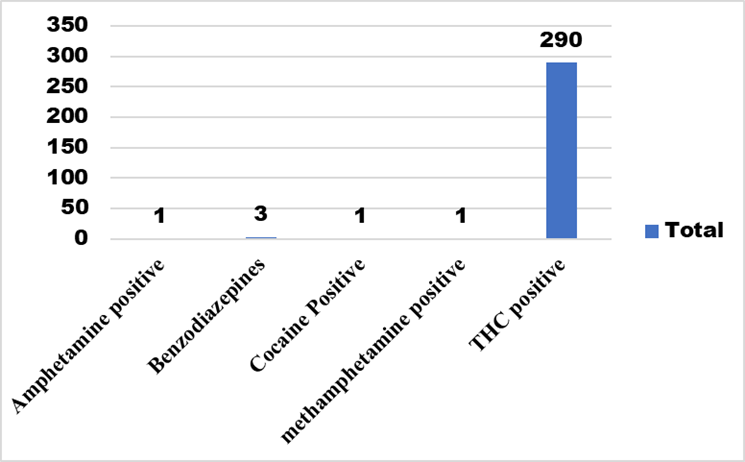
Fig. 1: Showing Number of cases in which single drug was positive
| S. No. | Drugs consumed |
Age distribution in years |
||
|---|---|---|---|---|
| 18-27 | 28-37 | 38 & above | ||
| 1. | Sum of Amphetamine positive | 14 | 14 | 1 |
| 2. | Sum of Benzodiazepines positive | 3 | 0 | 0 |
| 3. | Sum of Cocaine positive | 0 | 0 | 1 |
| 4. | Sum of Methamphetamine positive | 17 | 14 | 2 |
| 5. | Sum of THC(Tetrahydrocannabinol) positive | 237 | 61 | 17 |
| 6. | Sum of Morphine positive | 3 | 0 | 0 |
| 7. | Sum of Opiates positive | 0 | 1 | 0 |
Table 2: Age distribution of the subjects
| S. No. | Drugs consumed |
Combination of drugs |
||||
|---|---|---|---|---|---|---|
| Amphetamine positive |
Benzodiazepines positive |
Cocaine positive |
Methamphetamine positive |
THC (Tetrahydrocannabinol) positive |
||
| 1. | Sum of Amphetamine positive | 0 | 0 | 0 | 0 | 18 |
| 2. | Sum of Methamphetamine positive | 10 | 0 | 0 | 0 | 4 |
| 3. | Sum of Methylenediaoxy- methamphitamine positive |
0 | 0 | 0 | 0 | 1 |
| 4. | Sum of Morphine positive | 1 | 0 | 0 | 0 | 2 |
Table 3: Combination of drugs consumed by the subjects representing combination of maximum of 2 drugs
DISCUSSION
Urine offers as a best substrate to detect drug abuse quickly[1]. When a qualitative test is done, it’s a cost effective method which is sufficient for legal purposes. The presence of the drug in the body is enough to establish that the individual has consumed/injected/inhaled the ilicit substance. Quantitative estimation can be achieved by analytical methods like GC-MS, which is time consuming and expensive. The rampant drug usage and related arrests can overwhelm such a quantitative estimation methods in the existing medical laboratory system. The age distribution in this study states that most cases in 18 - 27 year old men which coincides with the national statistics as mentioned in the website of the national centre for prevention of the drug abuse[1]. Men are more commonly involved in drug abuse in acute and chronic type of abuse. Long term abuse of drugs is known to cause psychosis and cognitive decline[2].
In the current study, maximum number of cases (87%) were positive for THC only and was the highest used substance of abuse in all age groups. With the interpretation of results of the present study, it is noted that 18–27-year-old men were highest users of drugs. Tetrahydrocannabinol (THC) is the main psychoactive ingredient in the cannabis plant. Chewing, smoking of the cannabis products is commonly practised. It makes one feel “high” when he/she smokes marijuana or eat an edible. The person will have paranoia and hallucinations, impaired judgement and delayed reactions. This drug is currently illegal to produce, sell and consume in India[3]. However, due to its very few medicinal properties its being advocated to be made legal in treatment of few conditions like Anxiety and Pain management.
Amphetamine was used in 30 cases alone or in combination with other drugs in the current study. Amphetamine is one of the drug used as medication in the management and treatment of ADHD and narcolepsy (uncontrollable urge to sleep). It is classified as a central nervous system stimulant. Common experiences with it are hyperactivity, arrythmia, hallucinations, delusions, paranoia and psychosis, even cases with intracranial hemorrhages have been reported[4]. Chronic use of amphetamine and its derivatives produce cognitive deficiencies which is an undesirable effect in all age groups[5]. Benzodiazepines were detected in 3 cases. These are prescription drugs used for depression, anxiety, sedation and in seizures[1, 4, 6]. A person can abuse these drugs for its sedative properties or become dependent after using it briefly for a medical condition[7]. Both Benzodiazepines and amphetamines are prescription drugs. Illegal, Untoward and unfiltered sales are invariably present in such cases of abuse[1, 4, 6].
Only one case was positive for Cocaine use. The age of the individual was 45 years. The reason for this pattern may be associated with the cost and availability of the substance itself in contrast to easier availability of substances like cannabis. Cocaine produces increased confidence, intense pleasure and euphoria. In higher doses it may produce cardiac arrest. India has seen a steady increase in the use of the cocaine over the last decade; this is a result of an economic boom in the country increasing the affordability of the substance[8]. Over a period of time the price of cocaine has decreased, and its potency increased to encourage sales throughout the world[9].
It is realized that THC combined with amphetamines produces elevated levels of euphoria, maintains appetite and counteracts negative effects suggesting that the users are aware of the complementing effects of the drugs[3, 10, 11]. This is probably the reason for the increased incidence of combined usage of the cannabis and Amphetamines together. There is clear evidence that a chronic usage of both cannabis and amphetamines can cause drug induced psychosis[12]. Increased incidence of usage of Cannabis among young people is associated with higher risk of suicidal behavior patterns[8]. Four main reasons for concurrent use emerged: self-medication, availability and preference, drug effects/properties, and financial and life situation. People who mixed drugs together predominantly wanted to achieve desired drug effects/properties, such as a specific high or balancing stimulating and sedating effects[13].
Two cases were positive for morphine use and one case positive for opiate use, in combination with amphetamines and its derivatives. Amphetamines are used to counteract the CNS depressant action of the morphine and Morphine cancels out the undesirable effects of amphetamine induced hyperactivity[14].
CONCLUSION
With the present study it is understood that men in the age group of 18-27 years consume more drugs compared to women. THC is the commonly consumed drug, and it is commonly combined with amphetamines followed by amphetamines and methamphetamines abuse. Benzodiazepines, opiates and morphine were less commonly abused. The pattern highlights the increased incidence of drug abuse among the younger adults. Most of these arrests were made in groups, which emphasizes the fact that abuse of drugs usually involves a peer pressure, curiosity and grooming of vulnerable younger generation. Multidrug usage probability must be kept in mind to effectively treat a patient in the emergency rooms and rehabilitation center. This can be easily achieved by simple techniques like lateral flow immunoassay method instant test kits as mentioned earlier in the study. There are robust policies existing to prevent circulation and abuse of the drugs in our country. Hurdles to these policies exist in plenty. Therefore, preventing drug abuse requires a multi-faceted approach that involves education, policy, community engagement, and support systems. School, community awareness programs and early Intervention Strategies should be taken up by policy makers. Screening tests like the one mentioned above are efficient to rule in or rule out individuals exposed to drug abuse. These tests are easily available and are cost effective. Parental guidance and mentorship programs play an effective role in the guidance of young victims. Law enforcement agencies, medical and rehabilitation facilities and policy makers should be sensitized to mental health requirements of these victims. By implementing these policies collectively, communities can create a robust framework to prevent drug abuse and support affected individuals effectively.
DISCLOSURE
Conflict of Interest: The authors declare no conflict of interest.
Funding: Nil.
References
1. The National Center for Drug Abuse Prevention. <I>Substance Abuse Prevention</I>. https://www.nisd.gov.in/drug_abuse_prevention.html#:~:text=About%203.1%20crore%20individuals%20(2.8,people%20suffer%20from%20cannabis%20problems.&text=1.18%20crore%20(1.08%25)%20are,(non%2Dmedical%20use).&text=1.7%25%20of%20children%20and%20adolescents,need%20help%20for%20inhalant%20use.
2. Butelman ER, Huang Y, Epstein DH, Shaham Y, Goldstein RZ, Volkow ND, <I>et al</I>. Overdose mortality rates for opioids and stimulant drugs are substantially higher in men than in women: State-level analysis. Neuropsychopharmacology. 2023; 48 (11). Available from: https://doi.org/10.1101/2023.01.20.23284833
3. Porcu A, Castelli M. Cannabis and the Use of Amphetamine-Like Substances. Handbook of Cannabis and Related Pathologies. 2017; Available from: https://doi.org/10.1016/b978-0-12-800756-3.00066-1
4. Pillay VV. <I>Textbook of Forensic Medicine & Toxicology</I>. 19th edition.
5. Armenta-Resendiz M, Assali A, Tsvetkov E, Cowan CW, Lavin A. Repeated methamphetamine administration produces cognitive deficits through augmentation of GABAergic synaptic transmission in the prefrontal cortex. Neuropsychopharmacology. 2022; 47 (10). Available from: https://doi.org/10.1038/s41386-022-01371-9
6. Narayana Reddy KS. <I>The Essentials of Forensic Medicine & Toxicology</I>. 21st edition.
7. LeQuang JA. The Effects of Benzodiazepines on Memory. Naturally Occurring Benzodiazepines, Endozepines, and their Receptors. 2021; Available from: https://doi.org/10.1201/9780367814373-15
8. <I>Narcotic Drugs and Psychotropic Substances Act 1985</I>. https://www.indiacode.nic.in/bitstream/123456789/18974/1/narcotic-drugs-and-psychotropic-substances-act-1985.pdf
9. Rooney B, Sobiecka P, Rock K, Copeland C. From Bumps to Binges: Overview of Deaths Associated with Cocaine in England, Wales and Northern Ireland (2000–2019). Journal of Analytical Toxicology. 2023; 47 (3). Available from: https://doi.org/10.1093/jat/bkad002
10. Shehataa MS, Abdelfattah AH, Selim AN. A Case Report of Acute Respiratory Distress Syndrome From Cannabis and Amphetamine Use. Cureus. 2023; Available from: https://doi.org/10.7759/cureus.50003
11. Meyer P, Langos M, Brenneisen R. Human Pharmacokinetics and Adverse Effects of Pulmonary and Intravenous THC-CBD Formulations. Medical Cannabis and Cannabinoids. 2018; 1 (1). Available from: https://doi.org/10.1159/000489034
12. Alharbi FF, El-Guebaly N. Cannabis and Amphetamine-type Stimulant-induced Psychoses: A Systematic Overview. Addictive Disorders & Their Treatment. 2016; 15 (4). Available from: https://doi.org/10.1097/adt.0000000000000086
13. Schmidt K, Tseng I, Phan A, Fong T, Tsuang J. A Systematic Review: Adolescent Cannabis Use and Suicide. Addictive Disorders & Their Treatment. 2020; 19 (3). Available from: https://doi.org/10.1097/adt.0000000000000196
14. Steinberg A, Mehta A, Papamihali K, Lukac CD, Young S, Graham B, <I>et al</I>. Motivations for concurrent use of uppers and downers among people who access harm reduction services in British Columbia, Canada: findings from the 2019 Harm Reduction Client Survey. BMJ Open. 2022; 12 (5). Available from: https://doi.org/10.1136/bmjopen-2021-060447
Copyright
© 2026 Published by Laxmi Memorial Education Trust. This is an open-access article under CC BY 4.0 license. (https://creativecommons.org/licenses/by/4.0/)
Cite this article
Harshita V Kumar, Ullasa Shetty, Parinita Nayaka, Shodhan Rao Pejavar, Nithin David. Pattern of Drug Usage Among Cases Brought for Drug Screening to a Tertiary Care Hospital – A Retrospective Study. AJ J Med Sci 2026;3(1):12-16